Most old games out there are the real thing. But fakes exist, and the good ones can fool a careful eye. The good news is that most fakes give themselves away in the same few places: the label, the screws, the plastic shell and the circuit board inside. Once you know where to look, checking a game takes a minute or two. Short on time? Start with the quick check.
Is your game likely to be faked? Counterfeiters mostly copy games that sell for good money. Pokémon games are faked the most. Big role-playing games like EarthBound and Chrono Trigger, and Nintendo’s own classics, are favorite targets too. Cheap, common games are faked less often, but cheap fakes do turn up, so a low price alone doesn’t make a game safe.
Real vs. fake Pokémon Ruby: same label, different inside
Here are two copies of Pokémon Ruby for the Game Boy Advance, opened up. These are real photos. From the front, the two look almost the same. Inside, the difference is hard to miss.

- 1Clear, deep red shell with light, shallow molded lettering.
- 2A label with a sparkly, glittery foil finish and a crisp Official Nintendo Seal.
- 3A clock chip and its crystal. Ruby, Sapphire and Emerald keep track of the time of day.
- 4A coin battery. It only runs the clock: the save itself lives on a chip that needs no battery.
- 5The screw that holds the shell shut, seen from the side. Game Boy Advance games use a tri-wing screw with a Y-shaped slot.
- 6“© 2002 Nintendo” and the board code AGB-E05-01, which is the right board for Ruby.

- 1A cloudy, hazy shell with thick, deep lettering.
- 2A flat, shiny label with no foil sparkle, and a seal whose small words are blurred.
- 3A black blob of hard glue hiding a cheap chip. There’s no clock chip or crystal anywhere on this board.
- 4Empty battery pads. No battery and no clock means berries, tides and other timed events never happen.
- 5The Nintendo print and board code are copied. On their own, they prove nothing.
The quick check: how to tell if a game is fake
Work through these in order. The first five take a minute and don’t require opening anything. Checking a disc instead? Use the disc check.
Find a real one to compare
Search for clear photos of the exact title, system and region from a seller or collector you trust, or use the free photo libraries listed under Opening a cartridge. Next to the real thing, most fakes look a little off: the colors, the lettering, the shine of the label, the shade of the plastic.
Read the label closely
Look for blurry text, fuzzy artwork, the wrong font, square-cut corners, a spelling mistake, or a finish that doesn’t match a real copy. Then search the label code, the short code in small print such as DMG-AAUE-USA, with the game’s name. A code from a different game means a fake label.
Tilt it under a light
Many Nintendo labels have a number pressed in at the factory: a dent, not ink. Look on the front label of Game Boy, Game Boy Color and GBA games and the back label of NES, Super Nintendo and N64 games. A missing or flat-ink number means look harder. A pressed one proves little: fakers stamp them too.
Look at the screws
Most Nintendo and Sega games are closed with security screws that ordinary screwdrivers can’t turn. A plain cross-head screw on the outside is a warning sign, though the earliest NES games and some Genesis games really do use them. The right screw doesn’t prove much, though. More on screws.
Pick it up and play it
Check the seam all the way around and how the cart fits the console. If it feels tight going in, don’t force it. A gap, plastic that creaks or flexes, or a shell that feels light and hollow is worth a closer look. On a console, check that the right game starts and a save survives power-off. On an old game, a lost save often just means a worn-out battery. Playing fine proves nothing on its own.
Look inside if you can
The circuit board is the hardest part to fake. Real boards carry the maker’s name and a board code. Loose wires, stickers over chips, or a board your game never came on all point to a fake. A black blob of glue over a chip is a strong warning too, but a few real games have one, so compare with a real board for the same game. How to open one.


Repro, bootleg, counterfeit: words you’ll see
Collectors say “cart” for cartridge. Here are the other terms this page uses.
- Repro (reproduction)
- A copy of a game on a new board. Often sold openly as a repro. The trouble starts when one is resold as an original.
- Bootleg
- An unlicensed copy of a game, usually factory-made in large batches. Not every bootleg pretends to be the original.
- Counterfeit
- A copy made to pass as the real thing and fool a buyer.
- Donor cart
- A cheap real game that a faker opens up and turns into a pricier one by swapping its game chips and adding a new label. The shell, the screws and often the board are genuine.
- Board and board code
- The green circuit board inside holds the chips. Real boards have the maker’s name and a short board code printed on them, like AGB-E05-01. One board code is often shared by many games, so what matters is whether your game ever came on that board. The right code proves little, because fakes copy it.
- Label code
- The short code in small print on the label, like DMG-AAUE-USA. Search it with the game’s name. If it belongs to a different game, the label is fake.
- Epoxy blob
- A black blob of hard glue that covers a cheap chip. Very common on fakes, rare on real games.
- Lockout chip
- A small Nintendo chip on NES, Super Nintendo and Nintendo 64 games that tells the console the game is licensed. Fakes use a copy, a tiny substitute chip, or one taken from a donor cart. Game Boy games don’t have one: the system checks for Nintendo’s logo stored in the game instead.
- Clock crystal
- A tiny metal part, usually a small silver can, that keeps time for games with a clock, like Pokémon Gold, Silver, Crystal, Ruby, Sapphire and Emerald.
- Save battery
- A coin battery that keeps saves (or a clock) running on many older carts. After 20 or 30 years many have died or been replaced, which is normal.
- Rewritable (flash) chip
- A memory chip that can be erased and loaded again. Some real games use a small one just for saves (the real Ruby above has one). A rewritable chip holding the whole game is a sign of a fake.
- Pressed number
- A small number dented into the label at the factory. You see it best by tilting the game under a light.
- Burned disc
- A copy made at home on a blank recordable disc, a CD-R or DVD-R. Real game discs are pressed in a factory.
- Modded console
- A console changed with a chip or a software hack so it plays copies or imports. A copy that won’t start on a normal console can start fine on a modded one.
- Reseal
- A used or opened game wrapped again to look factory sealed.
Why cartridges get faked so often. An old cartridge is mostly a memory chip or two on a small board. Once someone has a game’s data, putting it on a cheap board inside a look-alike shell costs very little, and the result plays on any console. A copied disc usually won’t even start on an ordinary console, so working disc fakes are harder to make, and the console itself often catches them. More on discs.
The screws: a quick lesson
Nintendo closed most of its cartridges with a security screw that an ordinary screwdriver can’t turn. Here’s what it looks like, next to the two other screws you’re likely to run into.
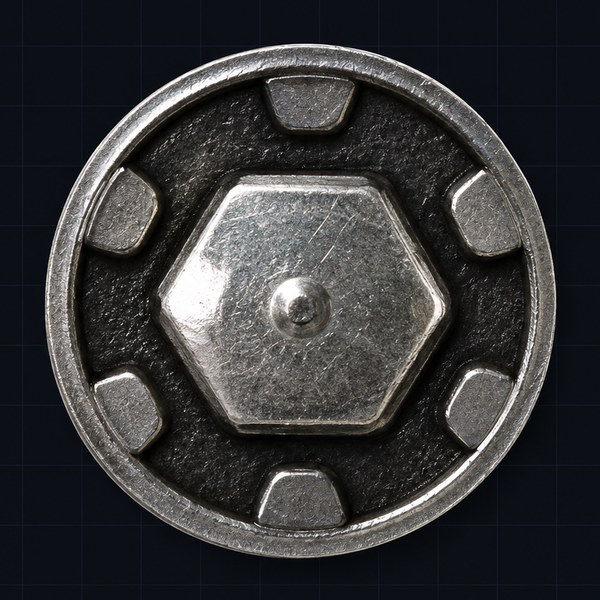
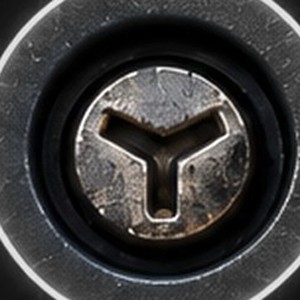

| System | Real screws on the outside | Bit size |
|---|---|---|
| Game Boy, Game Boy Color | One security screw on the back | 3.8 mm |
| Game Boy Advance | One tri-wing screw on the back | Tri-wing |
| NES | Three on the back. Early carts have five, often ordinary ones | 3.8 mm |
| Super Nintendo (US) | Two on the front, in the bottom corners | 3.8 mm |
| Nintendo 64 | Two on the back, in deep holes | 3.8 mm |
| Sega Genesis | Usually two on the back. EA games use their own shell | 4.5 mm |
| Nintendo DS | None. The card is sealed shut | Don’t open |
Don’t lean on the screw too hard, either way. Many fakes now use the correct screw, and the bits are sold everywhere, so the right screw proves nothing on its own. And a cross-head screw on a real game can simply mean someone opened it once (to change a battery, say) and lost the original. Treat a wrong screw as a reason to look inside.
Opening a cartridge
You never have to open a game to sell it to us. But if you’re about to buy something expensive, the board inside answers most questions in seconds.
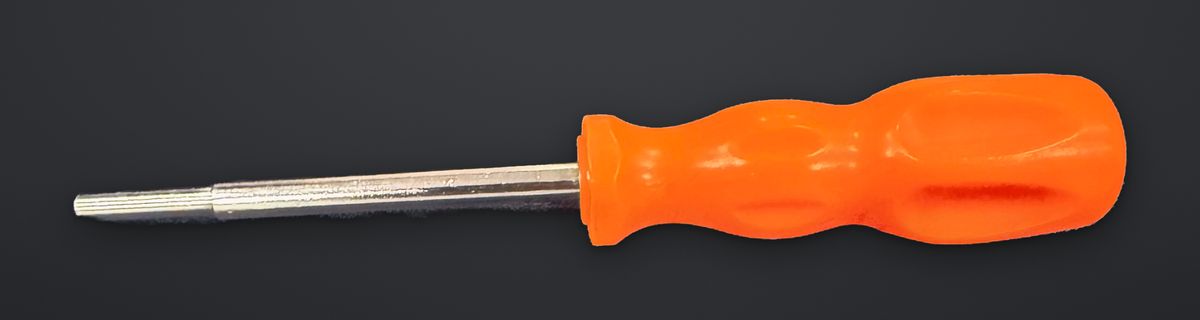
What you need
- 3.8 mm security bit: Game Boy, Game Boy Color, NES (except the earliest carts), Super Nintendo and Nintendo 64.
- Tri-wing bit: Game Boy Advance.
- 4.5 mm security bit: most Sega Genesis games. Leave EA games closed: their shell is hard to open without breaking a clip.
- Nintendo DS: don’t try. DS cards are sealed shut and opening one breaks it.
The bits cost a few dollars online, sold as “game bits” in the 3.8 mm and 4.5 mm sizes. Turn gently, don’t force anything, and keep the screws together. Inside a Nintendo 64 cart, two ordinary cross-head screws hold a metal shield over the board. That’s normal.
What you’re looking at
A real board has the maker’s name (Nintendo or Sega, or the publisher on some third-party games), a board code and usually a year printed on it, separate chips with neat factory solder, and a battery only on games that save that way. The main game chip usually carries the game’s own code.
A fake board often has a black epoxy blob instead of a chip, chips hidden under stickers, hand-soldered wires, a rewritable chip holding the game, or a battery on a game that never had one.
Fair warnings: a few real games have a blob, most famously the original Tetris for Game Boy, so compare with a real board for the same game. Owners often replace dead batteries in 30-year-old games. Board sizes also vary between real games, so a small board alone isn’t proof.
Free photo libraries of real boards: Game Boy Hardware Database (opens in a new tab) (Game Boy, Game Boy Color and Game Boy Advance), NesCartDB (opens in a new tab) (NES), SNES Central (opens in a new tab) (Super Nintendo), Nintendo64EVER (opens in a new tab) (Nintendo 64), Sega Retro (opens in a new tab) (Genesis) and r/gameverifying’s wiki (opens in a new tab) (many systems).
How to tell if a Game Boy game is fake
The original gray Game Boy games. Pokémon Red, Blue and Yellow are by far the most faked, followed by favorites like Link’s Awakening and Kirby. Start with the shell color and the lettering on the top edge, then look at the label.
A real one: our own Pokémon Red
A genuine North American copy from our stock, photographed front, back and inside. The green numbers mark the details worth checking on yours. Tap any photo to see it full size.
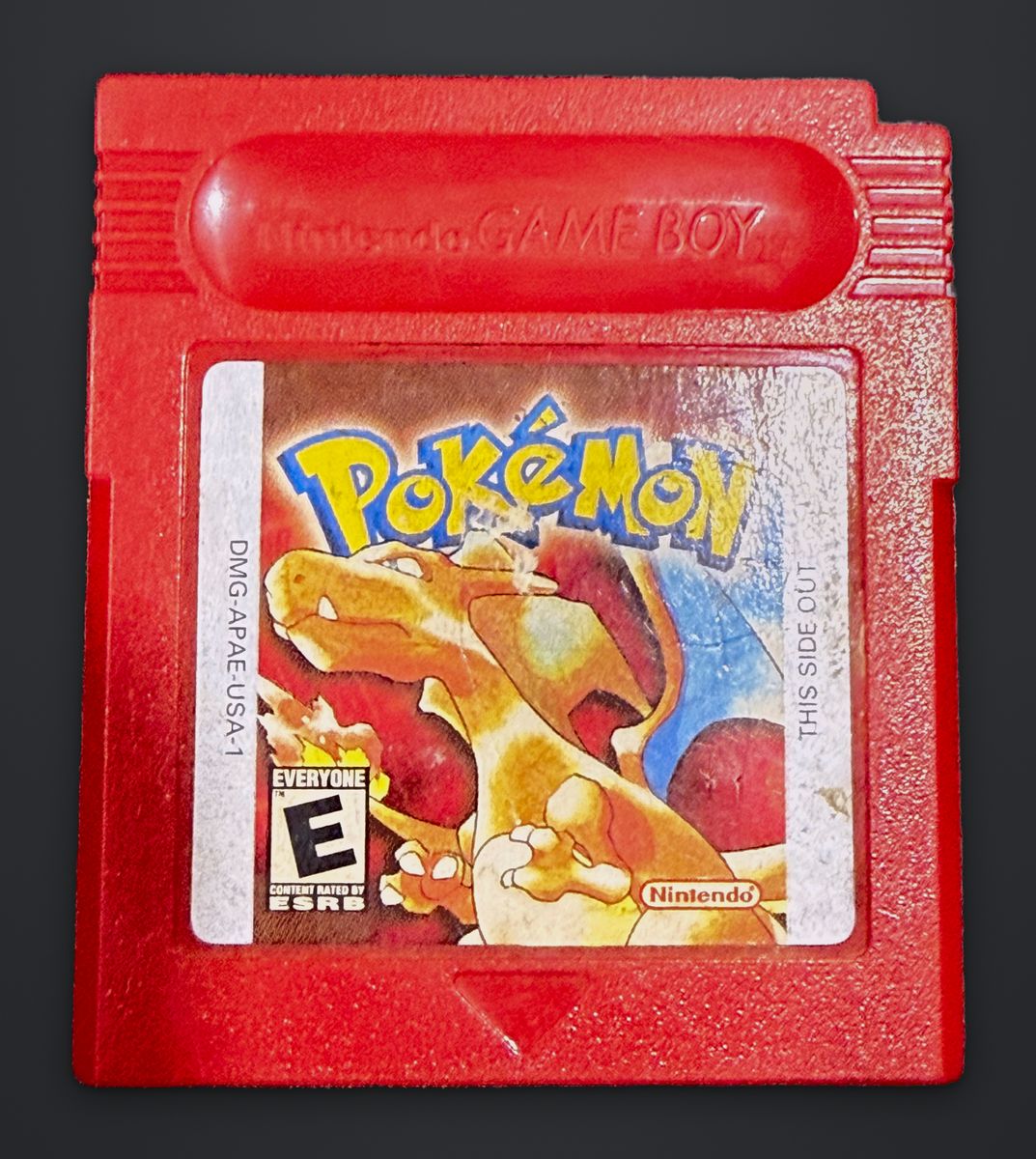
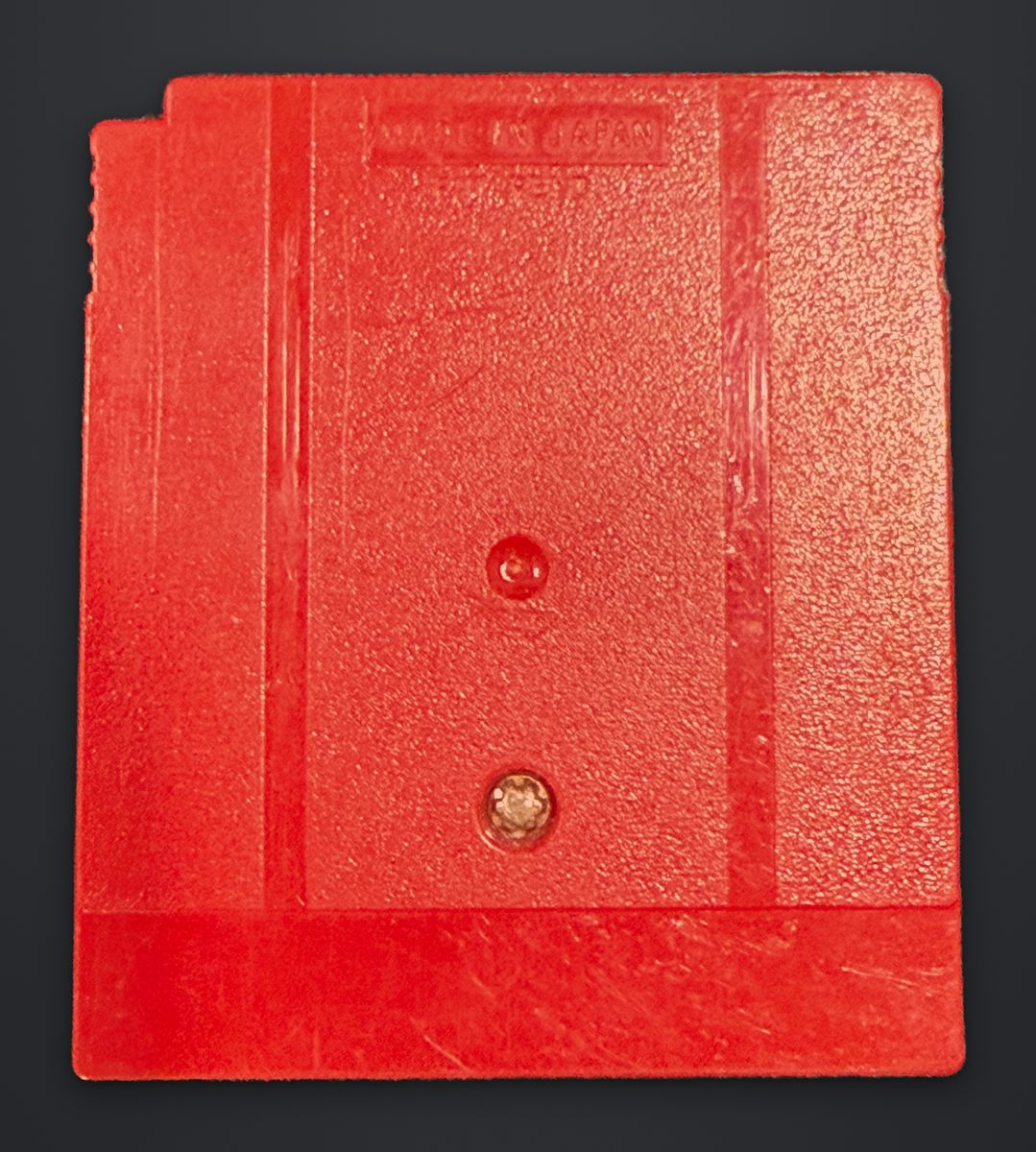
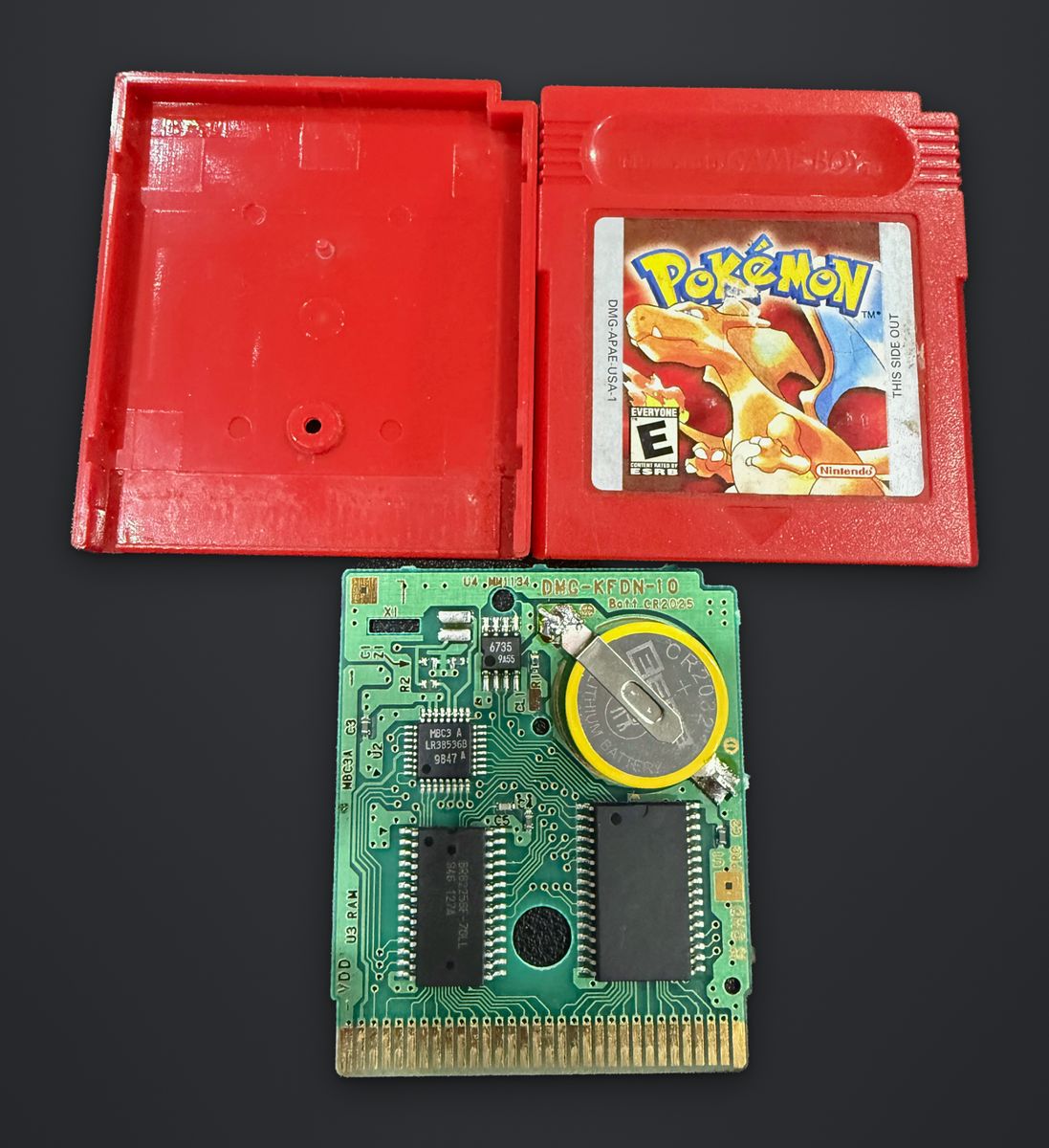
- 1“Nintendo GAME BOY™” molded into the top grip, in clean, even letters.
- 2The label code, DMG-APAE-USA-1. APAE is Pokémon Red’s own code.
- 3Red plastic. Pokémon Red only came in red outside Japan.
- 4The security screw: a round head with a post in the middle. Most fakes copy it, so it only counts against a cart when it’s wrong.
- 5“MADE IN JAPAN” molded in a small box at the top, with a second line under it. Shallow and faint like this is normal.
Front: We can’t see a pressed number on this worn label. Most real labels have one, but wear can hide it, and a few real ones never had one. A missing number means look closer, not fake.
Opened up: The back half (left), the front half with its label, and the board. This real board fills nearly the whole inside of the shell, with no wires, glue or stickers.
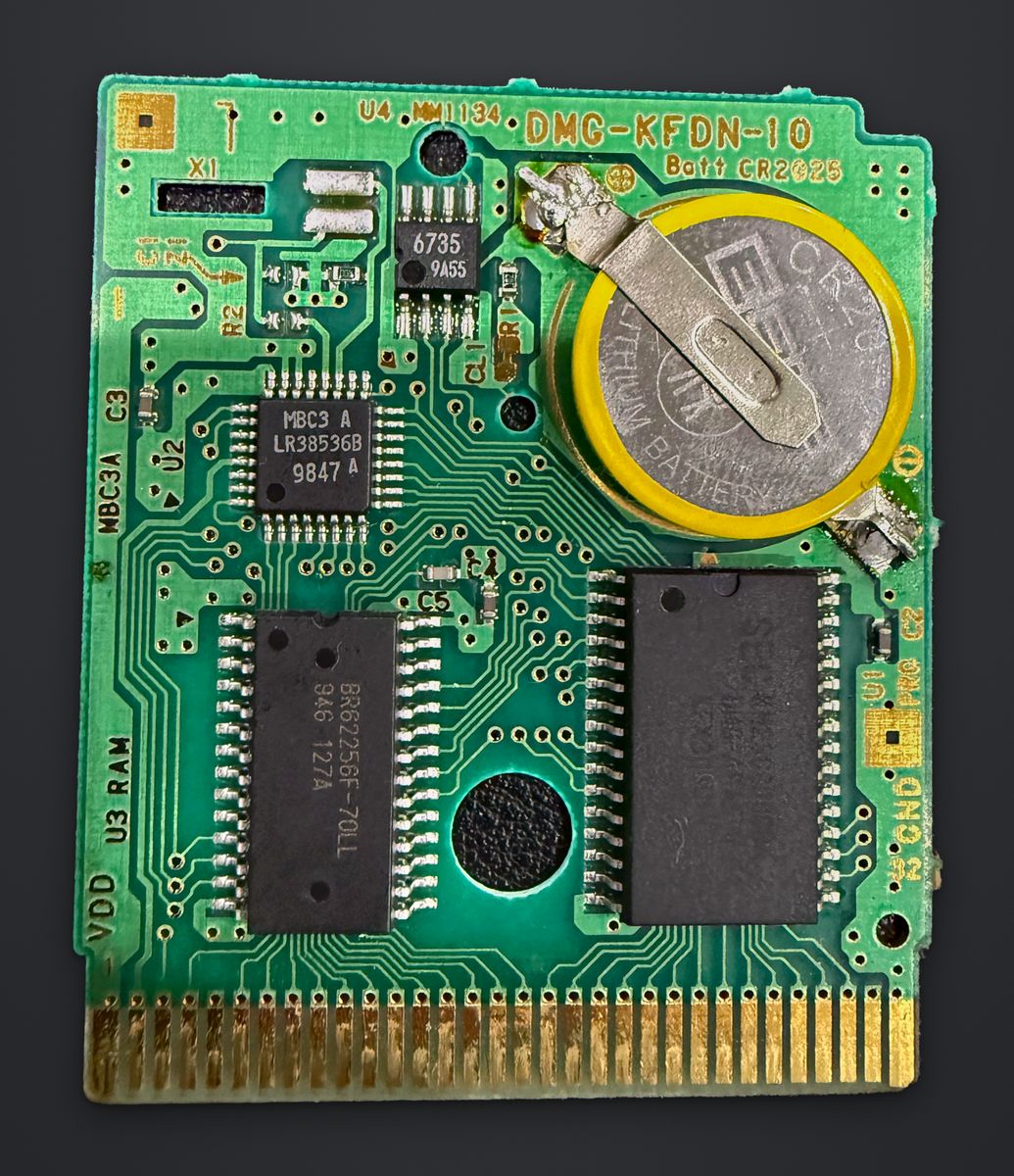
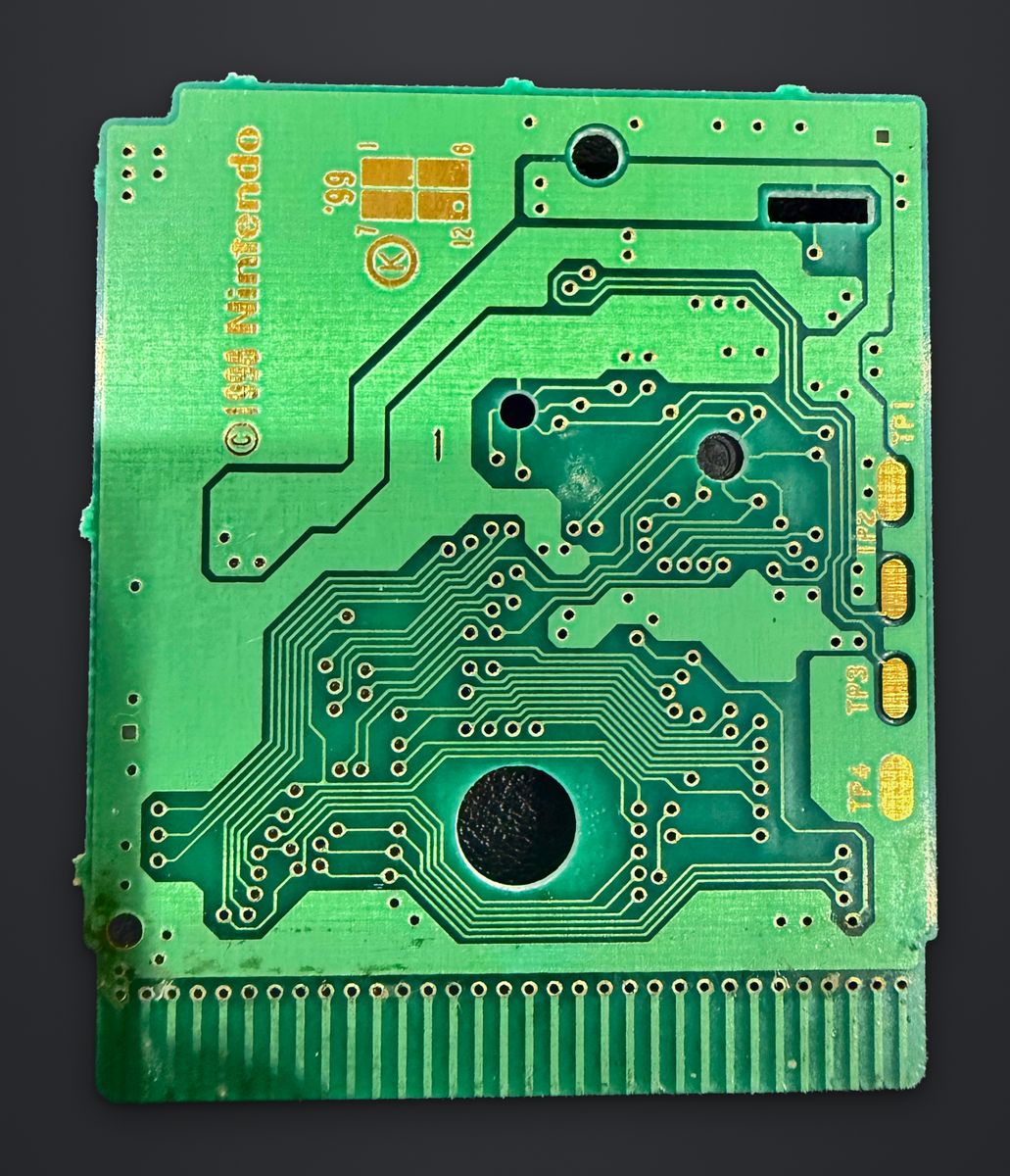
- 6The board code, DMG-KFDN-10. Real US Pokémon Red and Blue are on a DMG-KFDN board.
- 7The save battery. The board is printed for a CR2025, but this one has a CR2032: an owner replaced the dead original. That’s a repair, not a sign of a fake.
- 8X1, an empty spot for a clock crystal. Red and Blue have no clock, so it’s empty on every real copy. Empty pads only matter when the game needs the part.
- 9Nintendo’s MBC3 chip, which handles the game’s memory.
- 10The game chip. Its print has worn faint on this copy; on a clean one it reads DMG-APAE.
- 11Nintendo’s copyright line, printed on the board.
- 12A small group of gold rectangles. Fakes copy these now, so they prove little either way.
 (opens the full-size picture in a new tab)
- 1A board much smaller than the shell. Compare with a real copy of the same game: a real Pokémon board fills nearly the whole inside, though some small real games, like Tetris, do use small boards.
- 2Black epoxy blobs covering the chips. Nintendo’s boards use chips with printed markings you can read.
- 3A modern memory chip with very fine legs (here marked hynix), and no game chip printed with the game’s own DMG code, which a real board has.
- 4A board code that isn’t Nintendo’s, here SD007_48BALL_64M_V2. Real boards are printed with Nintendo and a board code starting with DMG, like DMG-KFDN-10.
Fakes often have a cross-head screw too, and missing or blurry lettering at the top of the back. But many use the correct screw, so a real-looking screw tells you little. The board tells you a lot.
Hardest to fake
- A real Nintendo board with the right board code for the game. Real US Pokémon Red and Blue are on a DMG-KFDN board (DMG-KFDN-01 or -10), and Yellow is on DMG-A02-01. Compare with photos on the Game Boy Hardware Database.
- The game’s own code printed on its main chip, if the print hasn’t worn off. Real Pokémon Red’s chip is marked DMG-APAE.
Red flags
- The top grip is missing “Nintendo”, or just says “GAME”.
- Grip lettering that looks clearly wrong next to a real cart, such as thick, blurry or crooked letters. Small differences are normal, since real carts vary a little.
- A gray or black Pokémon Red, Blue or Yellow with an English label. Outside Japan they only came in red, blue and yellow, and an English “Pokémon Green” is always fake.
- A cross-head screw.
- No “MADE IN JAPAN” at the top of the back, or lettering there that is blurry or misspelled. On real carts this lettering can be shallow and faint.
- A label code that belongs to a different game, a blurry or home-printed label, spelling mistakes, or label art that doesn’t match photos of a real label.
- Inside: a black blob (some real games have one too, such as many copies of Tetris, so compare with a real board), a cut or stacked board, stickers, loose wires, a rewritable chip holding the game, or no “Nintendo” on the board.
Proves nothing on its own
- The security screw. Many Game Boy fakes use the right one.
- The pressed number on the label. Fakers stamp them, and real labels can lack one or wear smooth.
- Correct-looking grip text and the right shell color on their own.
- The Nintendo logo when the game starts. The Game Boy won’t run a game without it, so every working fake shows it.
- A game that saves.
Normal on real games
- A black blob on Tetris. Many genuine copies use one.
- A dead or replaced save battery. Batteries this old run out, and owners swap them.
- A replacement battery held by tape, glue or a holder. Owners do this when they swap a dead battery, so look at the chips and the board code instead.
- A worn label, or an older-style ESRB logo.
- A gray Pokémon cart with a Japanese label. Japan’s versions came in gray. It’s a Japanese copy, not North American, and Japanese copies get faked too.
Sure yours is real? See what we pay for Game Boy games. Still not sure? Email us photos of the front, the back and the label.
How to tell if a Game Boy Color game is fake
Pokémon Gold, Silver and Crystal are the big targets, plus the Pokémon Trading Card Game and the Zelda Oracle games. Gold, Silver and Crystal come in two shell styles. Gold and Silver use the regular Game Boy shape (with a notch in one top corner) in gold or silver plastic. Crystal is a “Color only” game: a clear light-blue shell with glitter, no notch, and a grip that bulges out instead of sinking in.
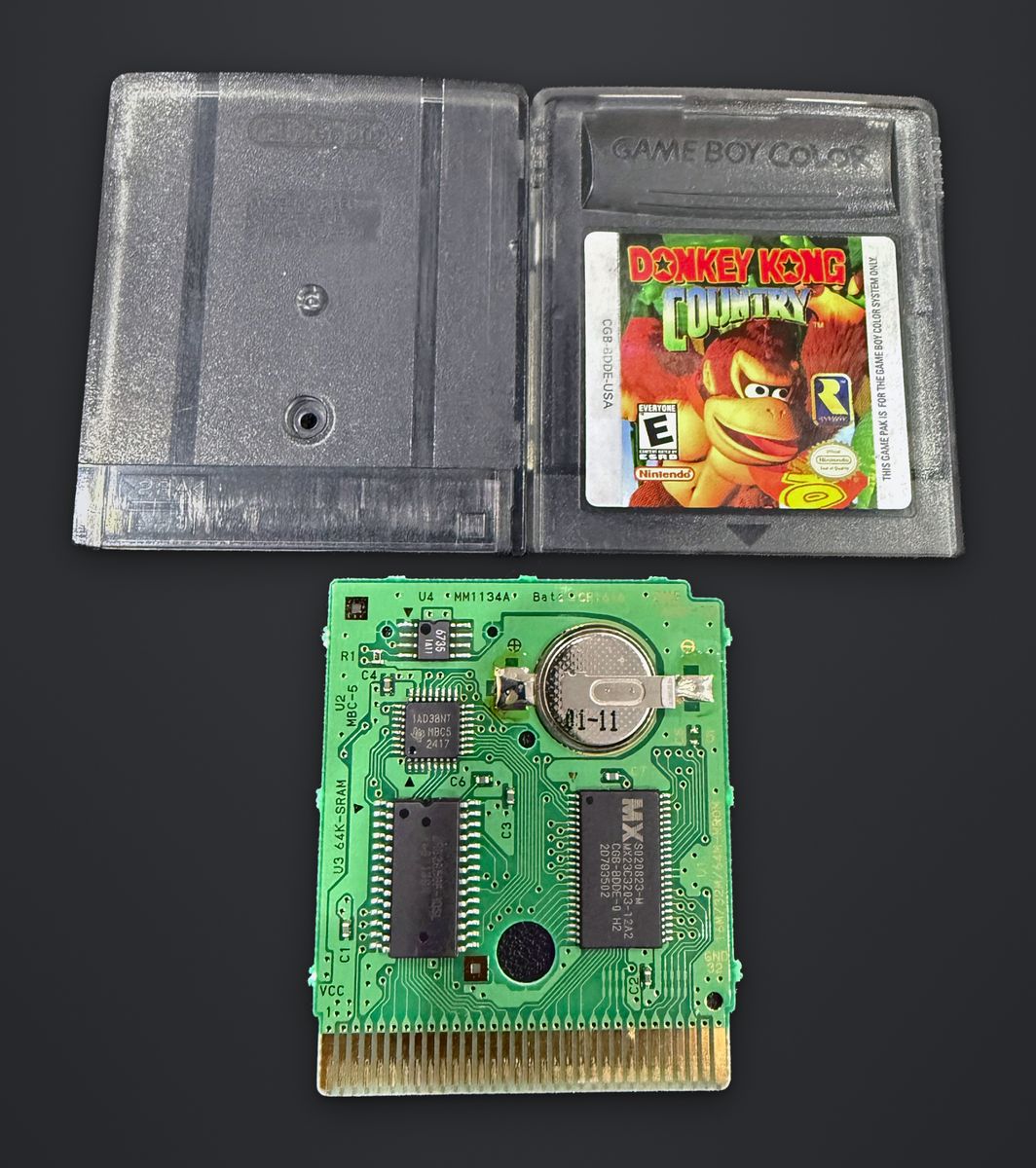
A real one: our own Donkey Kong Country
A genuine Color-only game from our stock. It isn’t a Pokémon game, but you check the same kinds of markings on every Game Boy Color cart. Real Pokémon Gold, Silver and Crystal boards also carry a clock crystal, which this game doesn’t need.
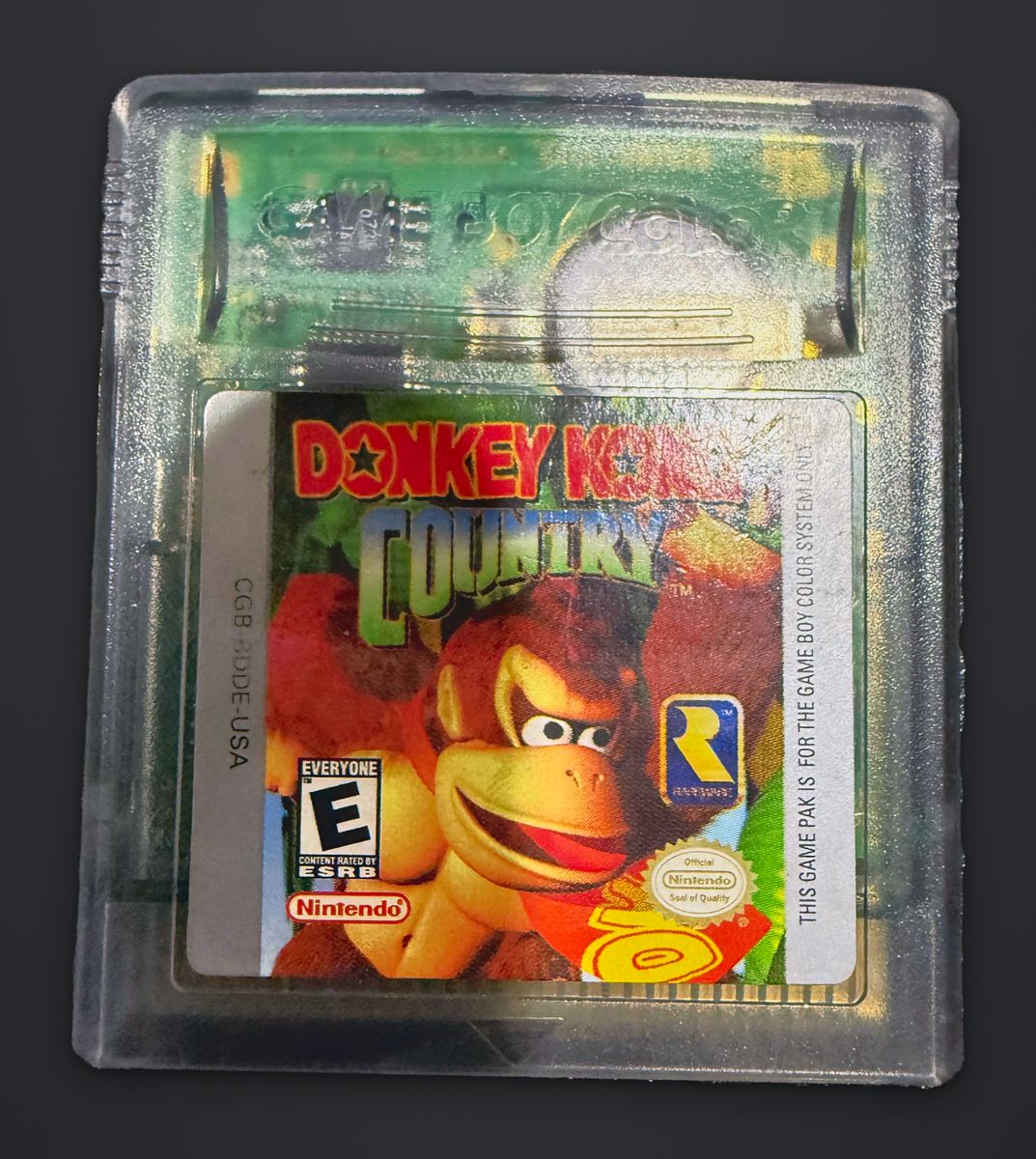
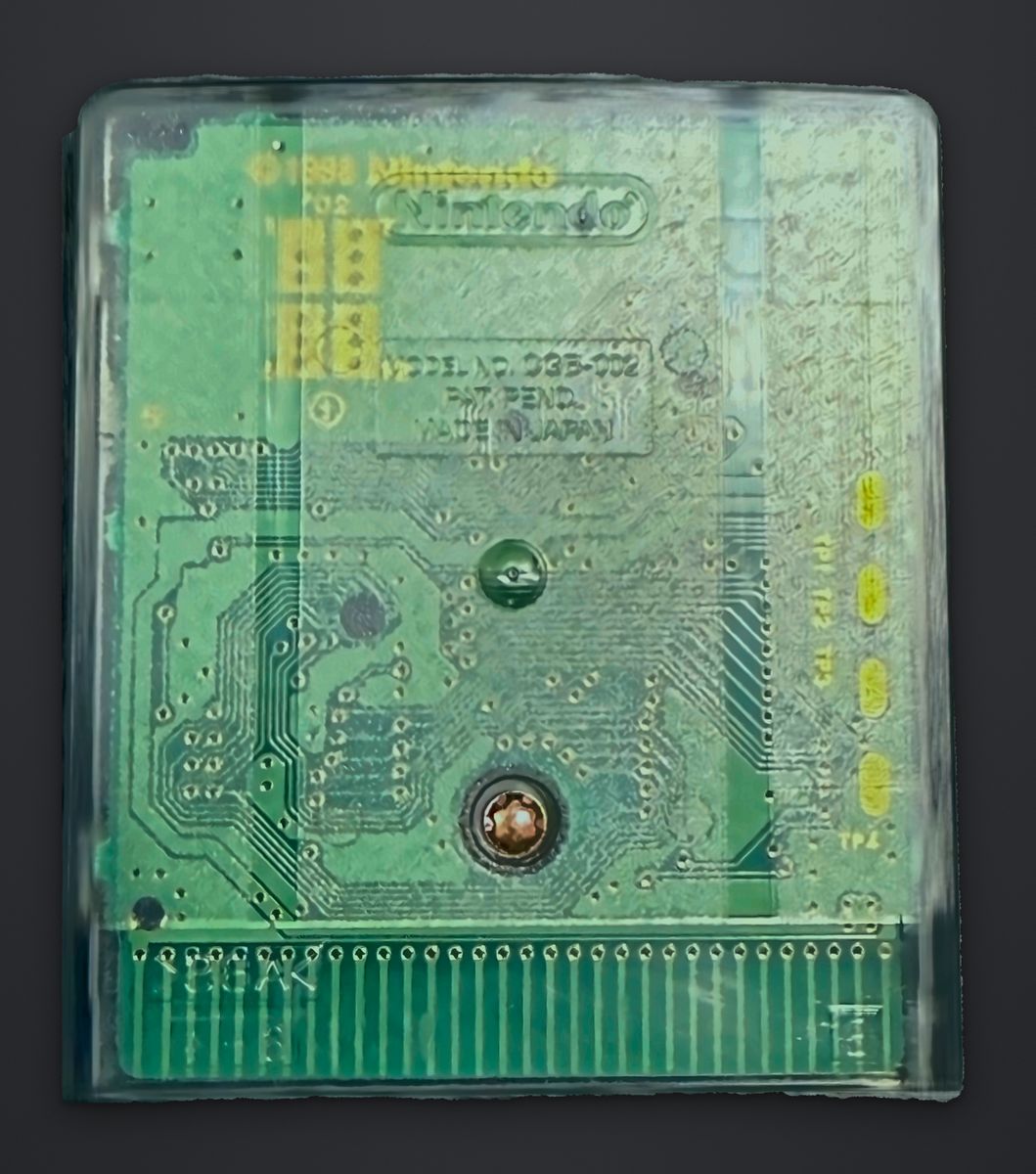
- 1“GAME BOY COLOR” molded into the top grip. In clear plastic it’s easiest to see at an angle.
- 2The label code, CGB-BDDE-USA. BDDE is this game’s code, and it’s printed on the game chip too (number 11).
- 3“This Game Pak is for the Game Boy Color system only.” Color-only games carry this line.
- 4Clear plastic. Most Color-only games came in clear plastic like this. A few had their own color, like Pokémon Crystal, so compare with photos of the same title.
- 5The security screw, in a round post that passes through the board.
- 6Molded panel: MODEL NO. CGB-002, PAT. PEND. and MADE IN JAPAN.
- 7The molded Nintendo logo, shallow and even.
- 8Through the clear plastic you can read Nintendo’s copyright line on the board.
Opened up: Both clear halves and the board. The round hole in the board is where the screw post passes through.
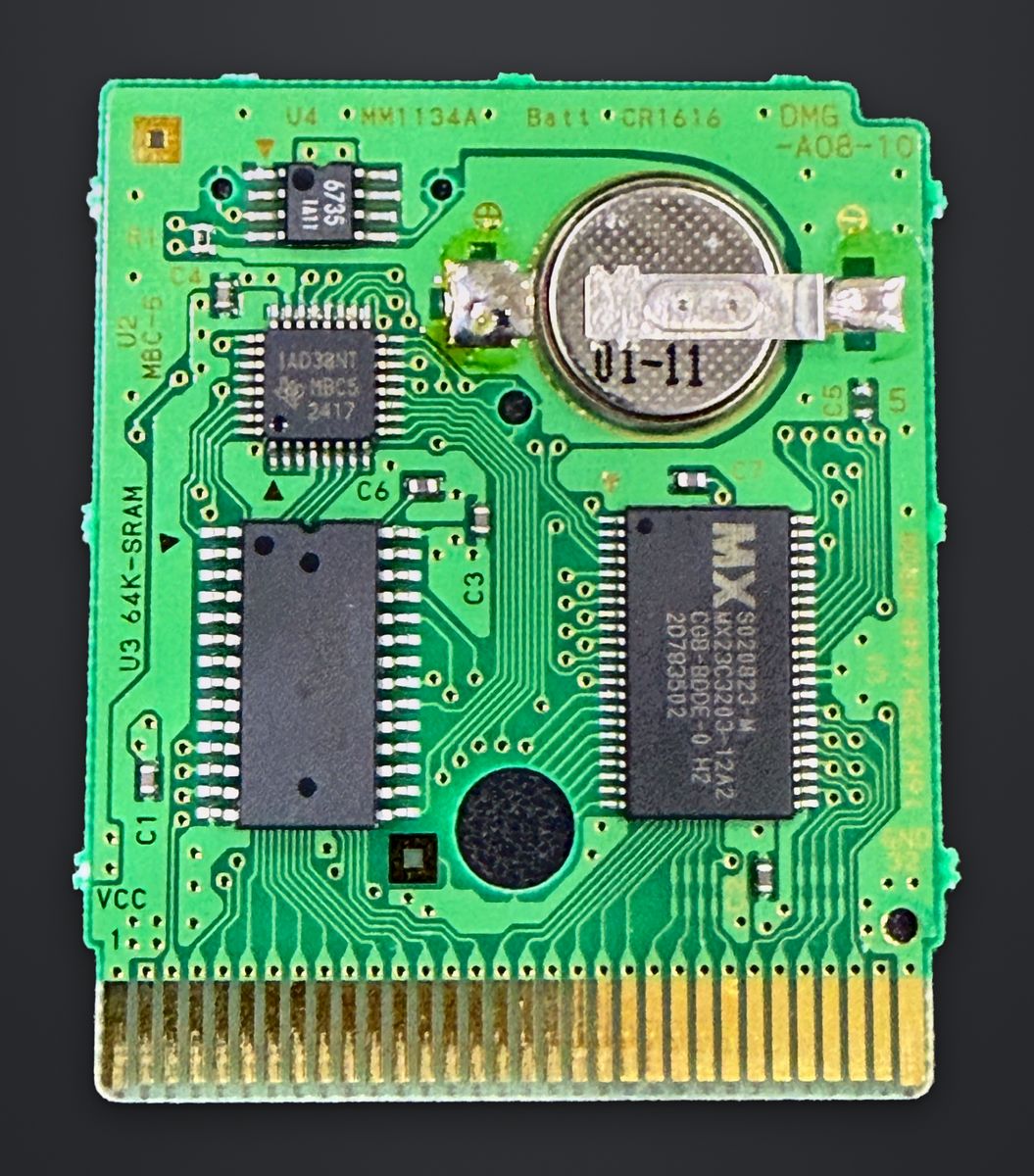
- 9The board code, DMG-A08-10.
- 10The save battery (a CR1616), held by metal tabs welded to it and soldered to the board.
- 11The game chip, printed CGB-BDDE-0. It matches BDDE in the label code: one of the hardest things for a faker to get right.
- 12MBC5, Nintendo’s memory controller chip.
- 13Nintendo’s copyright line.
- 14Gold rectangles, like on the Game Boy board. Fakes copy them.
 (opens the full-size picture in a new tab)
- A look-alike clear shell (yellow outline). Shells are easy to copy.
- A black epoxy blob where the chips should be.
- No clock crystal (dashed red outline), so a Pokémon Gold, Silver or Crystal clock can’t keep time.
- A dab of glue on the battery, and a cross-head screw (close-up).
Drawn as a Pokémon Gold or Silver fake in a clear shell so you can see inside. Real Gold and Silver are gold or silver plastic, and a real Crystal is clear light blue with glitter and no corner notch.
| Game (US) | Label code | Board code | Shell |
|---|---|---|---|
| Pokémon Gold | DMG-AAUE-USA | DMG-KGDU-10 | Gold, notched |
| Pokémon Silver | DMG-AAXE-USA | DMG-KGDU-10 | Silver, notched |
| Pokémon Crystal | CGB-BYTE-USA | DMG-KGDU-10 | Clear light blue with glitter, no notch |
Hardest to fake
- The board: DMG-KGDU-10 with a Nintendo copyright line, a clock crystal and a CR2025 battery on welded tabs. Crystal’s board really does start with DMG, not CGB.
- The label finish. Real Gold, Silver and Crystal labels shine like metal foil when you tilt them. A plain glossy label is a warning sign.
Red flags
- The top grip says only “GAME” or nothing.
- A Crystal in a notched shell, a black shell, or with a grip that sinks in instead of bulging out.
- A Gold or Silver with an English label in any color other than its own, such as gray. Real English copies came in gold or silver.
- A matte, plain glossy or home-printed label, or a label code from the other game. A real Gold label reads DMG-AAUE-USA, and a real Silver label reads DMG-AAXE-USA.
- A cross-head screw, or no “MADE IN JAPAN” lettering on the back.
- Inside any Game Boy Color game: a black blob, or stickers over chips. Inside a Pokémon Gold, Silver or Crystal: no clock crystal, or a board code other than the DMG-KGDU-10 in the table. Most other games have no clock crystal, and some came on more than one board, so compare with photos of the same game.
- Broken English in the game, or Pokémon names cut off at 5 letters.
Proves nothing on its own
- The pressed number on the label.
- The screw, the grip text, the shell color and the label code on their own.
- The small group of gold rectangles on the board. Fakes copy them.
- A clock that works, or a game that saves.
- A cart-reading gadget calling it “legit”. They have passed fakes and failed real games.
Normal on real games
- “TIME NOT SET” on the start menu (the one with CONTINUE and NEW GAME), or a clock that loses time. On a real cart this usually means a tired battery. It doesn’t prove the game is real, though.
- A replaced battery. Clock games drain them faster, so many have been changed. A new one held by tape, glue or a holder is normal too.
- No save file. Changing the battery wipes the save unless someone backed it up first.
- Different chip brands on two real copies. Nintendo used several suppliers.
Sure yours is real? See what we pay for Game Boy Color games. Still not sure? Email us photos of the front, the back and the label.
How to tell if a Game Boy Advance (GBA) game is fake
Pokémon Ruby, Sapphire, Emerald, FireRed and LeafGreen are faked in huge numbers. The Ruby photos at the top of this page show the most useful checks. Two quick ones need no screwdriver: shine a light into the slot at the bottom and read the white printing on the board, and look at the molded text on the back. No printing in the slot is a strong sign of a fake. So is a board code that doesn’t fit the game, but check the table below first, since some games came on more than one board. Correct printing proves little, since the fake Ruby above has it.
A real one: our own Pokémon LeafGreen
A genuine copy from our stock. FireRed and LeafGreen are two of the most faked games there are, so these details are worth a close look.
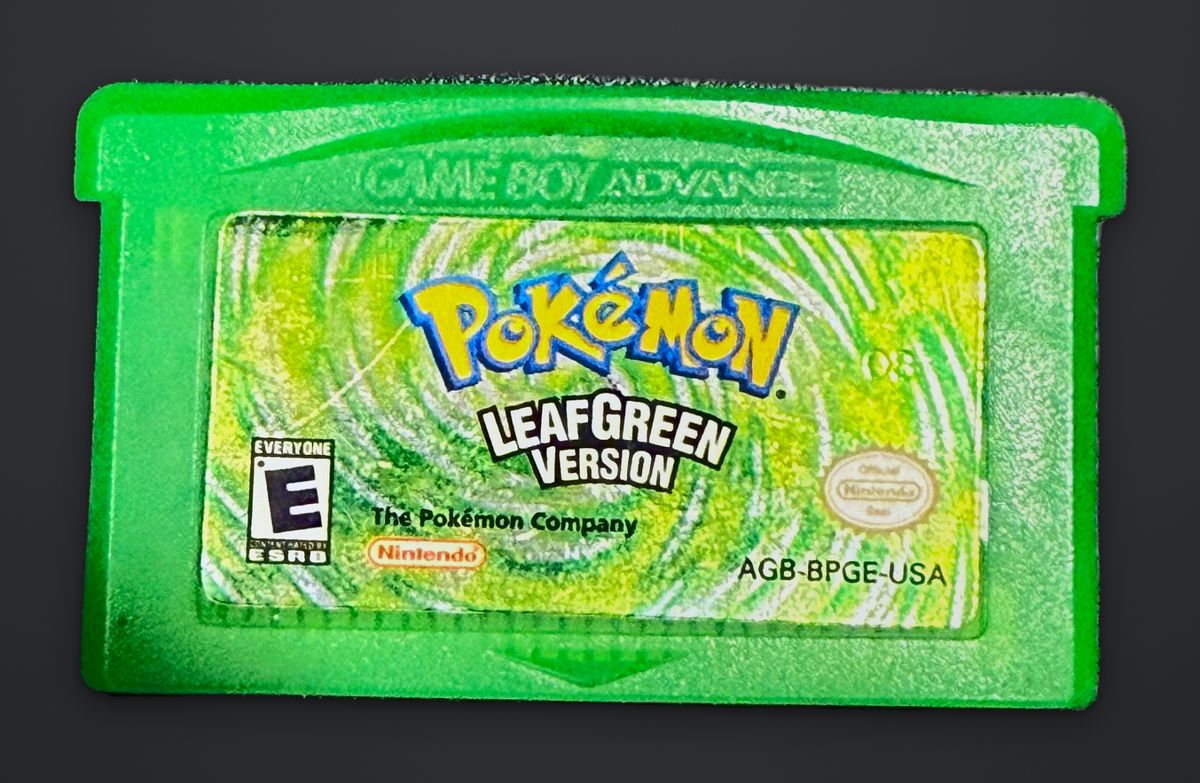
- 1“GAME BOY ADVANCE” molded across the top.
- 2A small number, “08”, pressed into the label. Tilt the cart under a light to see it.
- 3The label code, AGB-BPGE-USA. BPGE is LeafGreen’s code.
- 4The label’s shiny, metallic finish. Fakes often look flat or plain glossy.
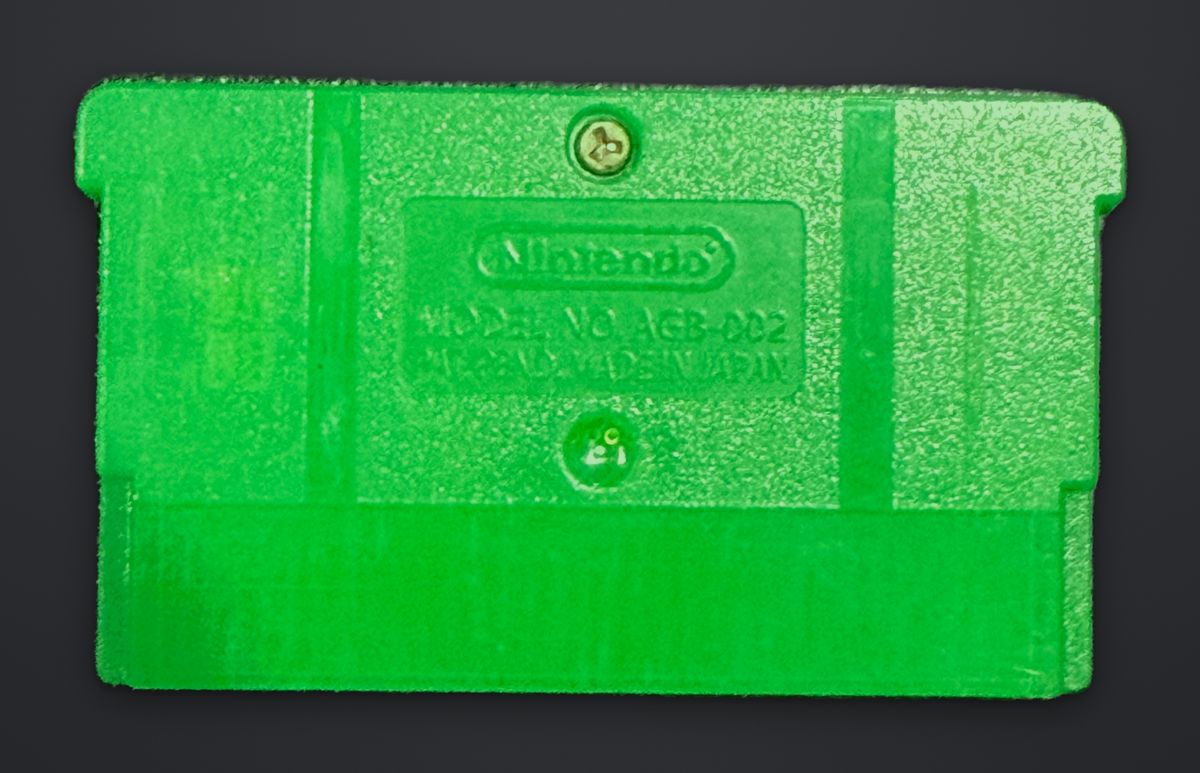
- 5The tri-wing screw, with three slots in a Y shape.
- 6The molded panel: the Nintendo logo, MODEL NO. AGB-002 and PAT. PEND. MADE IN JAPAN, in shallow, even letters. Check the spelling: fakes have turned up with “Nintondo”.
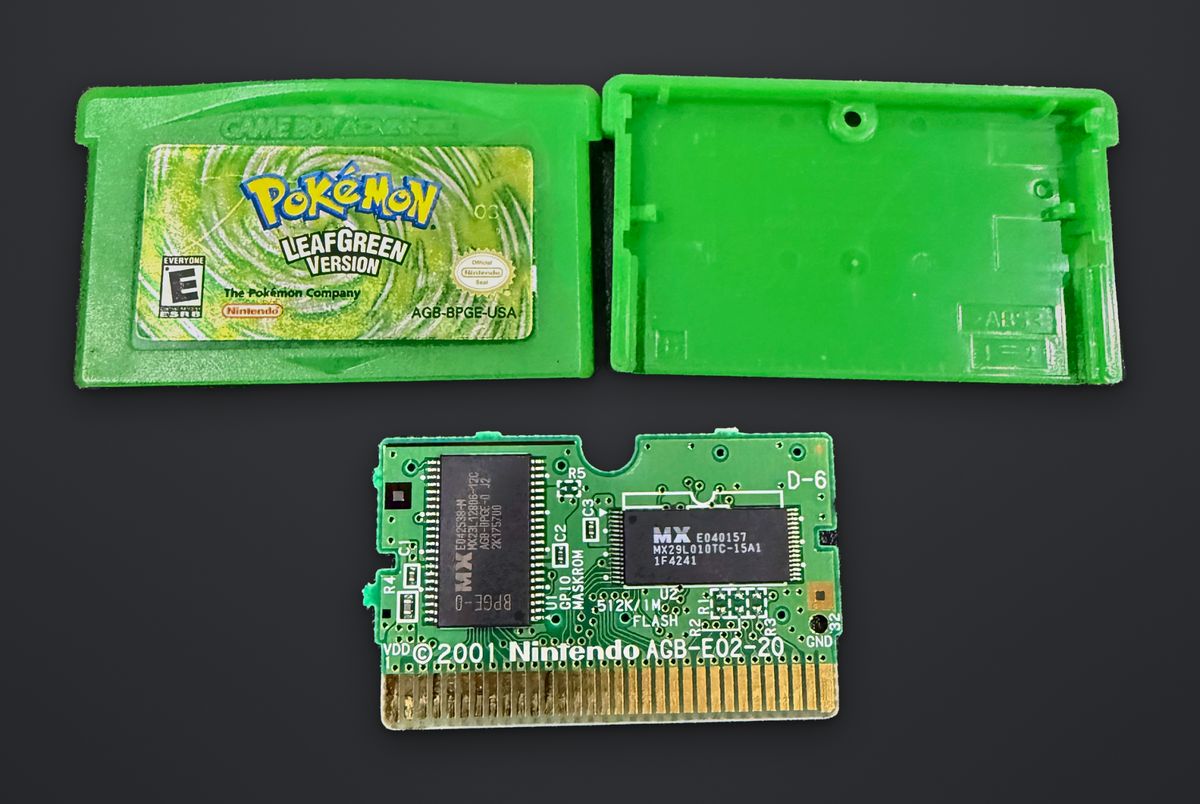
- 7With the cart closed, this bottom line of the board shows through the slot: © 2001 Nintendo and the board code. Shine a light into the slot to read it without opening anything.
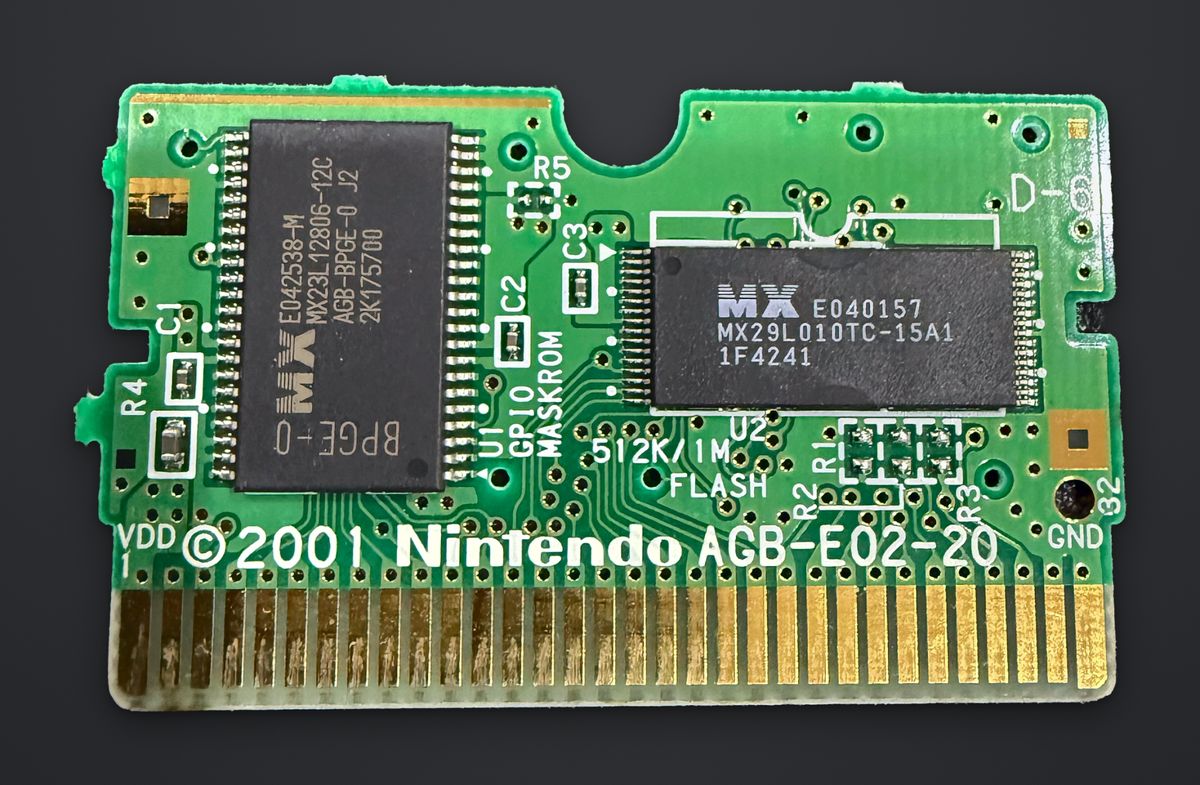
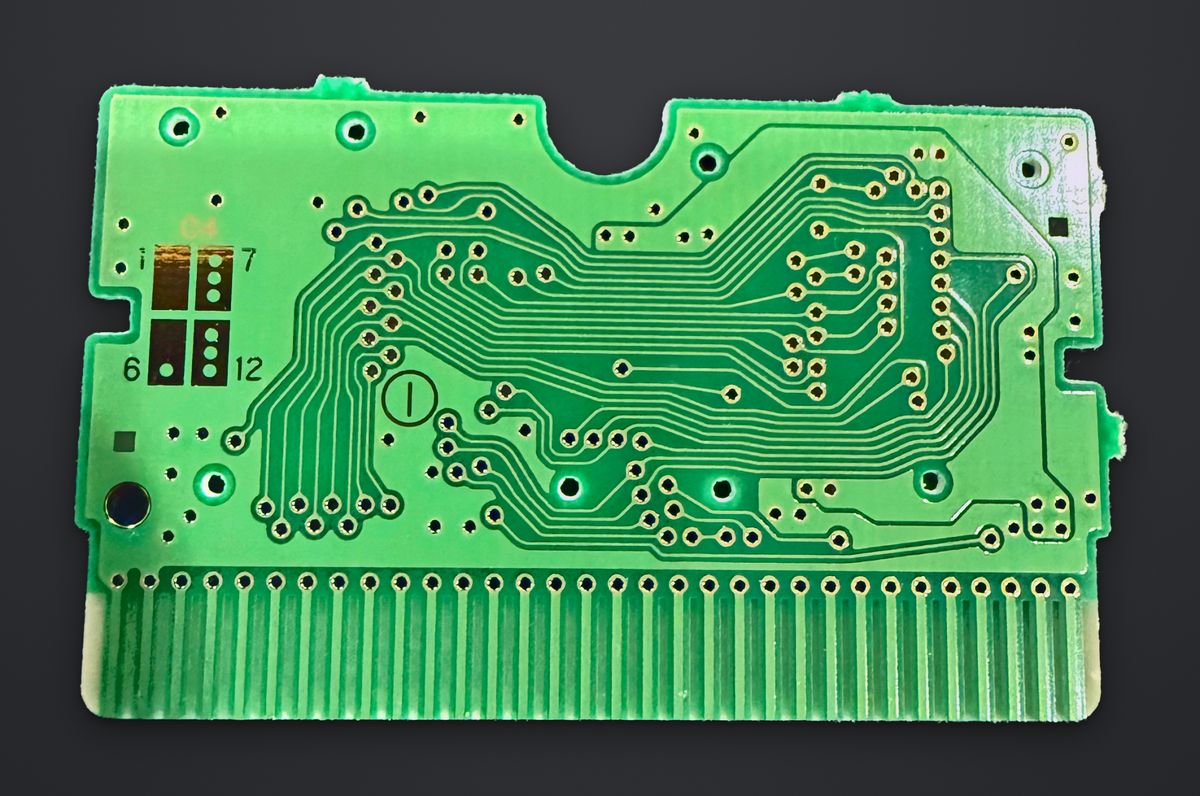
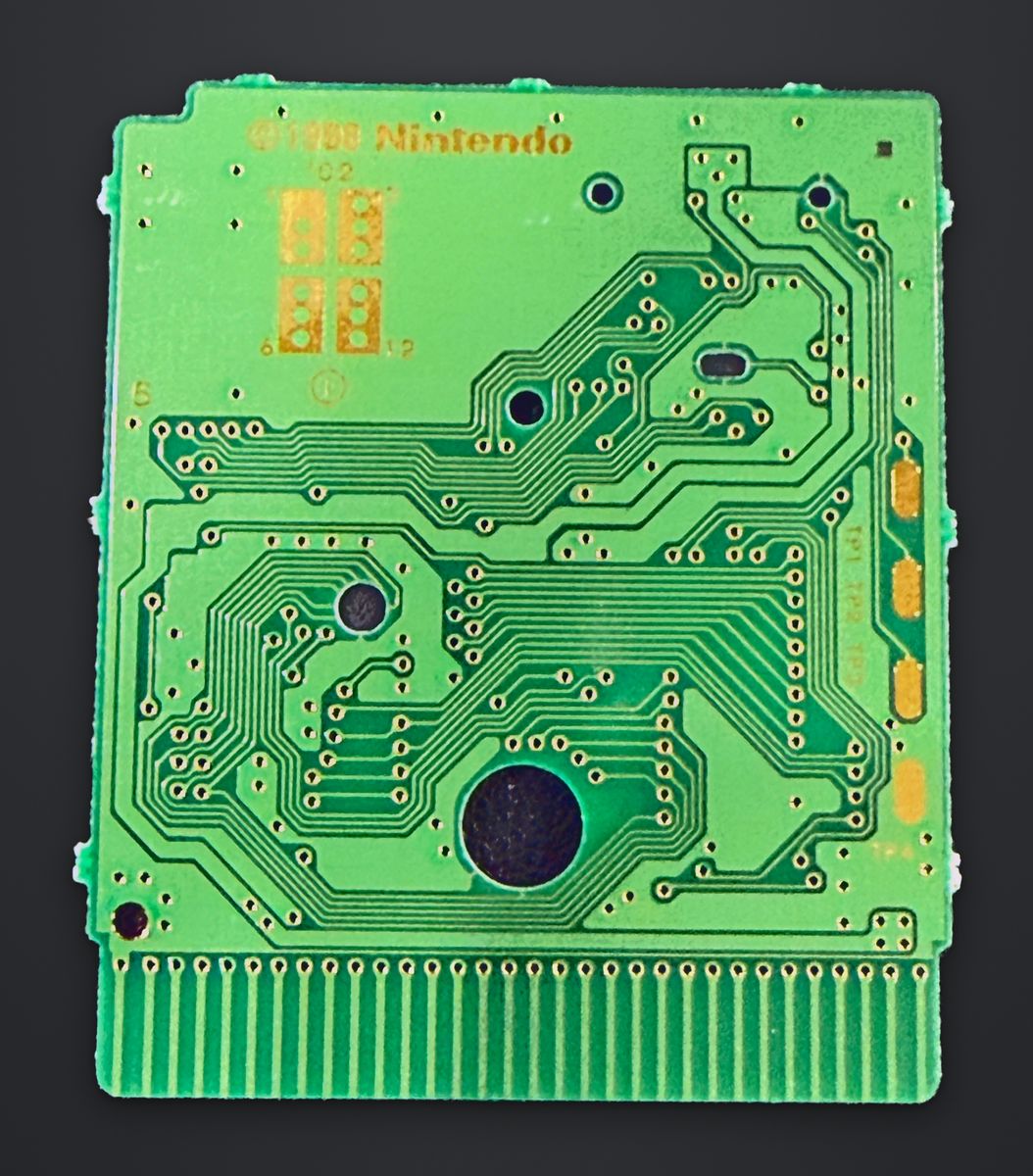
- 8© 2001 Nintendo and the board code AGB-E02-20, the right board for FireRed and LeafGreen.
- 9The game chip, printed AGB-BPGE-0. It matches the label code.
- 10The save chip. It’s a flash chip, which is fine here because it only holds your save; the game itself is on the game chip. On many fakes a flash chip holds the whole game.
- 11The gold rectangles on the back of the board. They show the month the board was made. Fakes copy them now, so they prove little, but real Pokémon boards almost always have them, so missing ones on a Pokémon game are worth a closer look.
Board, front: There’s no battery: FireRed and LeafGreen never had one.
 (opens the full-size picture in a new tab)
Real (top)
- Two Macronix (MX) chips: the game chip and the chip that keeps your save (green boxes).
- The board code AGB-E02-30, one of the two codes a real LeafGreen board has.
- No black blob anywhere.
Fake (bottom)
- A black epoxy blob over the game chip (close-up).
- A different memory chip from the real one, marked CHINA (close-up).
- The board code AGB-E05-01, the code on Ruby, Sapphire and Emerald boards, not LeafGreen (red box).
Drawn from photos of a real and a fake LeafGreen. You can read the board code through the cartridge’s slot and check it against the table below. Better fakes copy the right code, so look at the chips too.
| Game (US) | Label code | Board code (read through the slot) | Battery inside? |
|---|---|---|---|
| Ruby / Sapphire | AGB-AXVE-USA AGB-AXPE-USA | AGB-E05-01 | Yes, for the clock |
| Emerald | AGB-BPEE-USA | AGB-E05-01 | Yes, for the clock |
| FireRed / LeafGreen | AGB-BPRE-USA AGB-BPGE-USA | AGB-E02-20 or AGB-E02-30 | No, never |
Hardest to fake
- The “Migrate from” test above.
- The right parts, not just the right board code: Ruby, Sapphire and Emerald have a clock chip, a crystal and a coin battery. FireRed and LeafGreen have no battery at all.
Red flags
- A cross-head screw.
- A shell that doesn’t match photos of a real copy of the same game, or a gray or black copy of any of the five. Ruby, Sapphire and Emerald are deep, see-through colors, and FireRed and LeafGreen are brighter and less see-through. Lighting changes how colors look, so compare side by side when you can.
- A flat label, wrong fonts, or a missing label code. Ruby, Sapphire and Emerald labels have a sparkly, glittery foil, and FireRed and LeafGreen labels a shiny metallic look. A shiny label proves little on its own, since labels can be replaced.
- Missing or misspelled back text (“Nintondo”), or lettering that looks much deeper or sharper than on a real cart.
- No printing visible in the slot, or a board code that doesn’t fit the game.
- A battery inside FireRed or LeafGreen, or no clock chip and crystal inside Ruby, Sapphire or Emerald. (A missing battery alone can just mean someone removed a dead one.)
- A black blob, stickers, handwritten or stamped ink marks, or a rough-cut board. Neat white factory print, like the small D-6 on our LeafGreen board, is normal.
- FireRed or LeafGreen saying “The 1M sub-circuit board is not installed.” It means the game can’t find its save chip.
- Saves that disappear, or a “previous save file will be loaded” message every time you start it. Once, after the power went off during a save, can happen on a real cart.
- An English Mother 3. It was only ever sold in Japanese.
Proves nothing on its own
- The shell color, back text, tri-wing screw and slot printing on their own.
- A pressed number on the right side of the label. Many fakes have one now, though a crisp, unworn label with none is worth a closer look.
- The small gold rectangles on the back of the board. Fakes copy them, and some real boards for other games use different marks or none at all.
- A game that starts and plays normally.
Normal on real games
- “The internal battery has run dry. The game can be played. However, clock-based events will no longer occur.” Real Ruby, Sapphire and Emerald carts show this when the clock battery dies. Fakes with no clock chip show it too, so it doesn’t settle anything.
- Clock events (berries, tides) not happening on a real cart with a dead battery.
- A replaced clock battery.
- A worn label with no visible pressed number.
Sure yours is real? See what we pay for GBA games. Still not sure? Email us photos of the front, the back and the label.
How to tell if a Nintendo DS game is fake
DS cards have no screws and are sealed shut, so every check happens on the outside. Pokémon is again the main target. Start with the code match: it works on every DS card, and a mismatch catches many fakes in seconds. Then check the label, the small triangle under it and the lettering on the back. Save the light test for the seven cards it works on.
A real one: our own Pokémon HeartGold
A genuine black infrared DS card from our stock, with the code match and the markings to check.
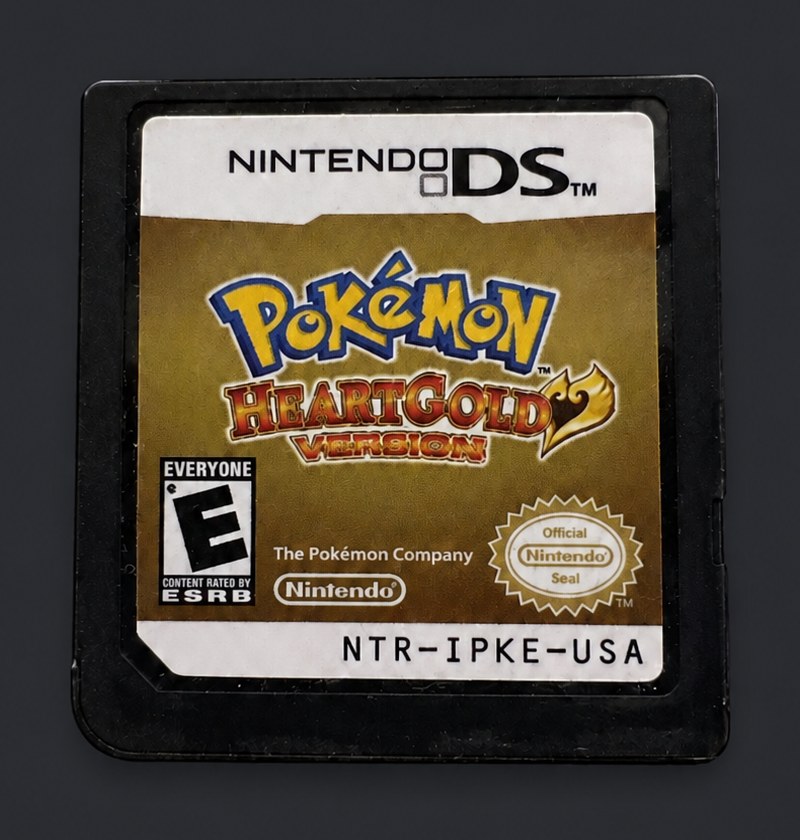
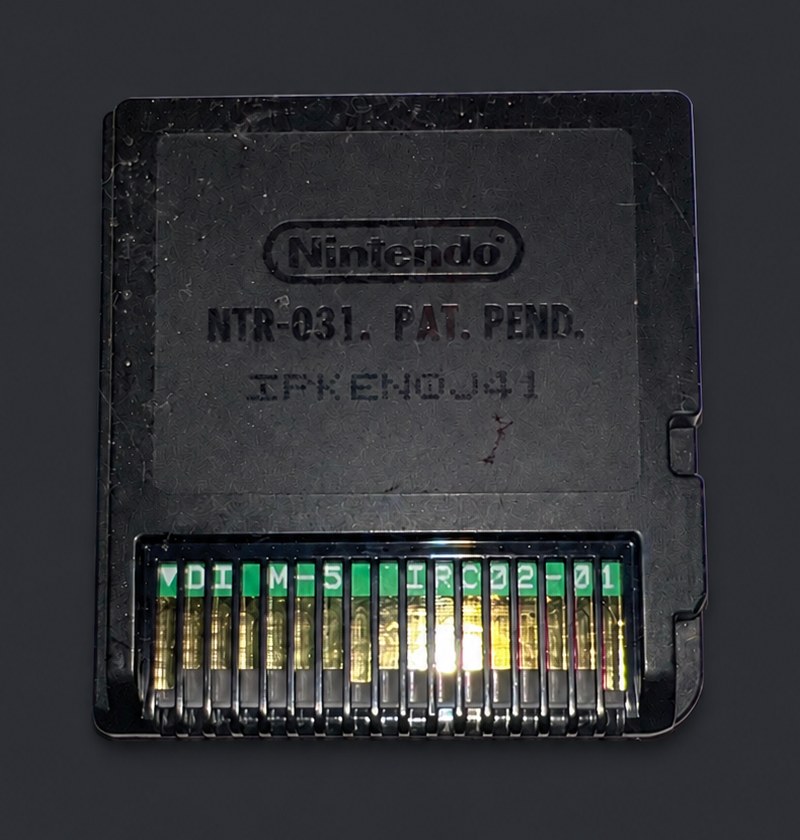
- 1The label code, NTR-IPKE-USA. The middle part, IPKE, is this game’s code.
- 2The ESRB rating box at the bottom left. A US card should have one.
- 3The bottom-left corner of the label is cut straight across at an angle, not rounded.
- 4The molded Nintendo logo.
- 5NTR-031: the black infrared card the Pokémon games use. An ordinary gray DS card says NTR-005 here.
- 6The printed code, IPKEN0J41. Its first four characters, IPKE, match the front label. The rest, here N0J41, changes from copy to copy, so a different ending is normal.
| Game (US) | Front label code | Back molding | Light test? |
|---|---|---|---|
| Diamond / Pearl / Platinum | NTR-ADAE-USA NTR-APAE-USA NTR-CPUE-USA | NTR-005, gray card | Doesn’t apply |
| HeartGold / SoulSilver | NTR-IPKE-USA NTR-IPGE-USA | NTR-031, black card | Should show red |
| Black / White | TWL-IRBO-USA TWL-IRAO-USA | NTR-031, black card | Should show red |
| Black 2 / White 2 | TWL-IREO-USA TWL-IRDO-USA | NTR-031, black card | Should show red |
All four Black and White games say “TWL” on the front because they are DSi-enhanced, and their codes end in the letter O, not a zero. The fourth letter of a code is the region: E is North America (the four Black and White games have O there instead), P is Europe and J is Japan, and other letters mean other countries. A different region means an import, not a fake.
The light test: why some Pokémon cards glow
A few Pokémon DS cards, the ones marked “Should show red” in the table above, are made from a special dark plastic. Shine a bright light through one and a real card glows pinkish red. The photo below shows four real ones from our stock with a flashlight behind them. Under it: why only these cards glow, how to do the test yourself, and why a glow alone doesn’t prove a card is real.

Why they glow, and why it only works on a few cards
This test only works on a few DS cards. Press a bright light against one of them, and the plastic glows pinkish red. The reason is inside: these cards have a small infrared part, so the game can talk to an accessory or another DS without wires. Infrared is light you can’t see, and Nintendo molded these cards from a dark plastic it can pass through. In ordinary room light, the card just looks black.
The only cards with this shell (North America)
- Pokémon HeartGold and SoulSilver: for the Pokéwalker step counter that came in the box.
- Pokémon Black, White, Black 2 and White 2: for quick infrared trades and battles. Two players just point their game cards at each other.
- Personal Trainer: Walking: for its Activity Meter step counters.
Real infrared cards are molded “NTR-031” on the back; ordinary gray cards say “NTR-005”.
How to do it
- Go somewhere dim.
- Hold a phone flashlight right against one side of the card.
- Look at the plastic from the other side, where the label doesn’t cover it. A real infrared card shows a pinkish red tint. An old-style fake stays solid black, or is plain gray to begin with.
Why it doesn’t work on other games. Every other DS card, including Pokémon Diamond, Pearl and Platinum, is ordinary gray plastic (white for DSi-only games) with nothing infrared inside. A flashlight shows nothing on a real one or a fake, so the test tells you nothing either way.
Why passing isn’t proof anymore. Since about 2023, some fakes come in a look-alike dark plastic that also shows pinkish red under a light. Scammers also reuse the shells of cheap, genuine Personal Trainer: Walking cards, which are the same black infrared card, and stick on a fake Pokémon label. Those pass the test easily. The back code catches that trick: it will start with IMW (the walking game) instead of the Pokémon game’s code. So a HeartGold, SoulSilver or any Black or White card that fails the light test is either fake or rebuilt inside another game’s card. One that passes still needs the other checks.
 (opens the full-size picture in a new tab)
Real (left)
- Top: with a flashlight behind it, the plastic around the label glows pinkish red.
- Bottom: the back says “NTR-031”, and the printed code starts with IPGE, the same four letters as the label code, NTR-IPGE-USA (green boxes).
- Close-up: bright gold contacts.
Fake (right)
- Top: the same flashlight, but the plastic stays black.
- Bottom: the back says “NTR-005”, the marking on ordinary DS cards, and the printed code starts with A2DE. That’s the code for New Super Mario Bros., not SoulSilver.
- The back code doesn’t match the front (red boxes): the label says IPGE, the back says A2DE.
- Close-up: the contacts look gold here too, so on their own they prove nothing.
Drawn from a real and a fake SoulSilver we’ve handled. This fake fails twice: it stays dark, and its back belongs to another game. The light test only applies to the seven infrared cards listed above, and newer fakes can pass it.
Four more checks, up close
Each picture changes just one thing, so you can see exactly what to look for.
 (opens the full-size picture in a new tab)
Real (left): level with the plastic around it and a little glossy, so it can look dark or nearly disappear in some light.
Fake (right): cut deep into the plastic, with sharp walls you can see from an angle.
 (opens the full-size picture in a new tab)
Real (left): in the middle of its recess, with the same thin border of plastic on every side and a bottom-left corner cut straight.
Fake (right): off-center, with an uneven gap and a rounded bottom-left corner.
 (opens the full-size picture in a new tab)
Real (left): shallow, sharp letters and a tiny ® beside the Nintendo logo.
Fake (right): deeper, blockier letters and no ®. The printed code is copied, so the code alone proves nothing.
 (opens the full-size picture in a new tab)
Real (left): a small rectangle in the middle.
Fake (right): smooth from end to end. A few real cards lack the rectangle too, so it’s a clue, not proof.
Hardest to fake
- The molded lettering on the back. On a real card it’s shallow and sharp, with a tiny ® at the upper right of the Nintendo logo. On many fakes the letters sit deeper and look bigger or blockier, or come out fainter and flatter, and the ® may be missing.
- Sharp label printing that matches a known real copy. The label sits in the middle of its recess with the same thin border of plastic on every side, and its bottom-left corner is cut straight.
- The small downward triangle molded below the label. On a real card it’s level with the plastic around it and a little glossy, so depending on the light it can look dark or nearly disappear.
Red flags
- HeartGold, SoulSilver or any Black or White game in a gray card, or with “NTR-005” on the back.
- A back code that names a different game, especially IMW (the walking game) under a Pokémon label.
- A Black or White label that says NTR instead of TWL.
- A US code with no ESRB age-rating box (the box with a letter like E) at the bottom left of the label, or an “RP” (rating pending) mark. RP is only used in ads before a game is rated, so it never belongs on a finished game.
- A rounded bottom-left label corner. On real labels that corner is cut straight.
- A label that sits clearly off-center, with a wide gap on one side and almost none on the other.
- A triangle under the label that’s cut deep into the plastic, with sharp walls you can see from an angle.
- A top edge with no small rectangle in the middle, just plain plastic. Most real cards have one, though a few don’t.
- On a US label: a misspelled word, no ™ after “DS”, or “Pokemon” without its accent.
- The wrong name or picture for the game on the DS menu. A relabeled card shows the game that’s really inside.
- Blurry art, washed-out colors, or dull gray contacts.
- A save that won’t stick. DS cards don’t use a battery to save, so a real one keeps its save.
- A US game in a clear, thick case (the European style). A real US case is black, or now and then white or blue, and thinner than the clear European one. Many real US cases also have a Nintendo DS logo molded into the plastic inside, by the card holder, so a case without one is worth a closer look.
Proves nothing on its own
- Showing red in the light test.
- A working link to a Pokéwalker on HeartGold or SoulSilver. It’s a good extra check, not proof.
- The “NTR-031” or “NTR-005” molding and a matching back code.
- The small rectangle on the top edge. Better fakes copy it.
- A real-looking case, cover and manual. Cases get swapped, so check the card itself.
- The label code, the Official Nintendo Seal and the logos.
- A game that starts, plays and saves.
Normal on real games
- A faded or missing back code on a well-used card.
- A label that has shifted a little over the years.
- Diamond, Pearl and Platinum not showing red. They’re plain gray cards when real.
- A P or J in the code. That’s a European or Japanese copy.
Sure yours is real? See what we pay for DS games. Still not sure? Email us photos of the front, the back and the label.
Are 3DS and Switch games faked?

Good news: these are rarely faked, and a few quick checks catch the scams that do turn up.
Switch. No fake Switch card that plays the game on its label has been reported: the games are encrypted, so a working fake is very hard to make. The rare scams are a cheap real game wearing a pricier game’s label, empty card-shaped shells, and cases with no card inside. Turn a card over before it goes in. A flat, blank back with no gold contacts showing is an empty shell, and one broke a Switch 2’s card reader. Then check that the game that starts matches the label. Test a Switch 2 card in a Switch 2. A card whose label code starts with LP- is a Game-Key Card: it holds no game and needs a download first, and that’s normal.
3DS. Fakes are still uncommon, but they’ve been turning up more often since early 2026, so give expensive games a careful look. A real 3DS card is almost always white, with a small tab on one edge. Its label code starts with LNA-CTR (LNA-KTR on games made only for the New 3DS), and the back has a pressed-in Nintendo logo and CTR-005, though good fakes copy these. A card whose code doesn’t end in -USA, like -EUR, -AUS or -JPN, is made for another region and won’t start on a North American 3DS: that’s an import, not a fake.
Sure yours is real? See what we pay for 3DS games and Switch games. Still not sure? Email us photos of the front, the back and the label.
How to tell if an NES game is fake
Many NES fakes start life as a cheap real game. The faker removes its chips, solders in programmable chips holding a pricier game, and sticks on a new label. For example, the valuable Little Samson, Panic Restaurant and Bubble Bobble Part 2 use common Nintendo boards that many cheap games also use. The result has a real shell, a real board and real screws, so the label and the chips are what give it away.
A real one: our own Dr. Mario
A genuine North American copy from our stock.
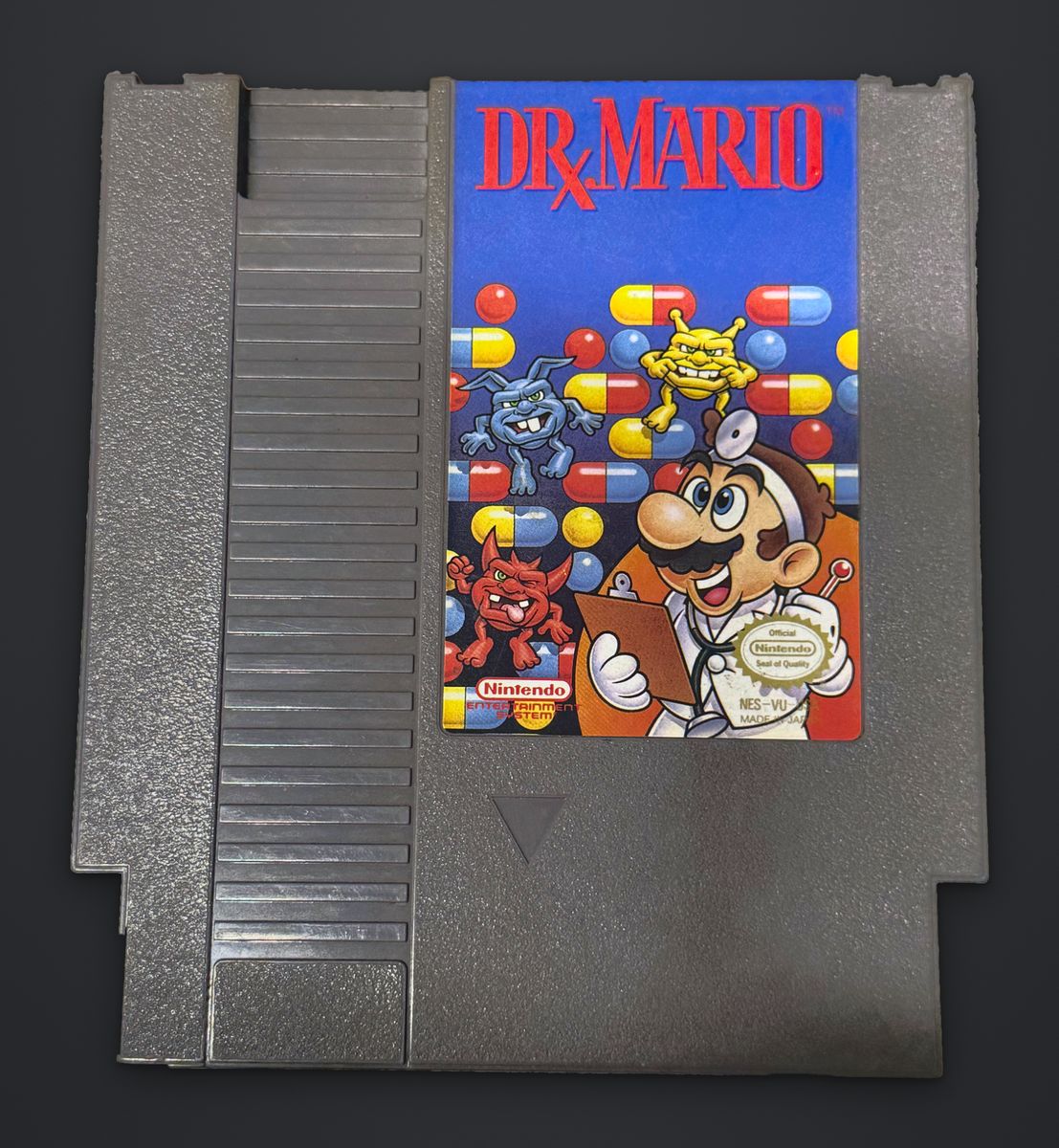
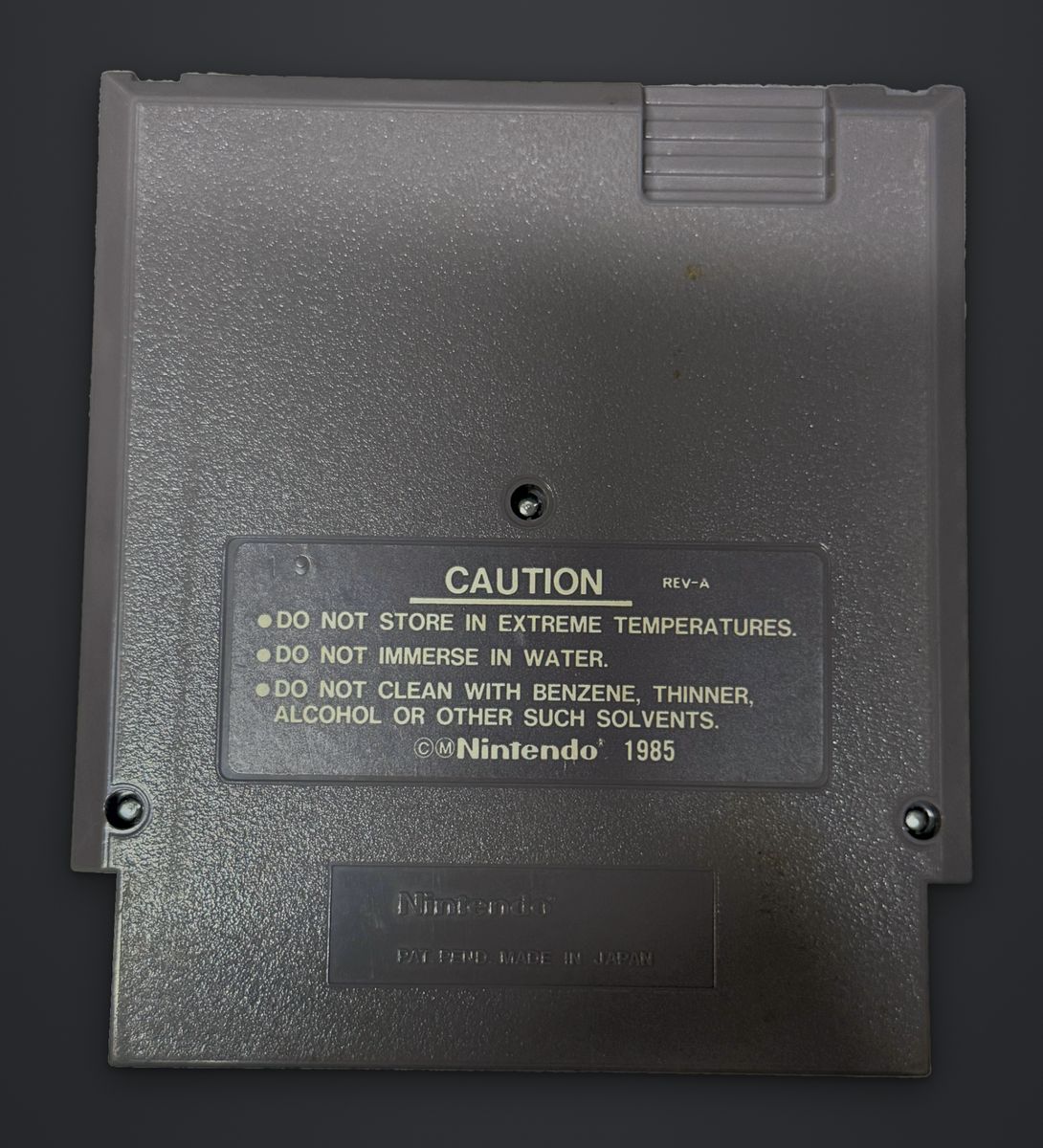
- 1The label code, NES-VU-USA, and MADE IN JAPAN in the label’s bottom corner (worn on this copy). VU is Dr. Mario’s code; you’ll find it again on the chips (numbers 9 and 10).
- 2The oval Official Nintendo Seal. Carts made after early 1989 have the oval. Carts made before that have a round seal, so an older game can have either one.
- 3Three security screws: this one and one in each bottom corner. Later carts like this one have three; the earliest had five.
- 4The back label, with CAUTION, REV-A and © Nintendo 1985.
- 5The number 19 pressed into the top-left corner of the label (close-up below). Tilt the cart to see it.
- 6Molded into the plastic: Nintendo and PAT. PEND. MADE IN JAPAN.
 Close-up: the pressed “19”. It’s a dent in the label, not ink.
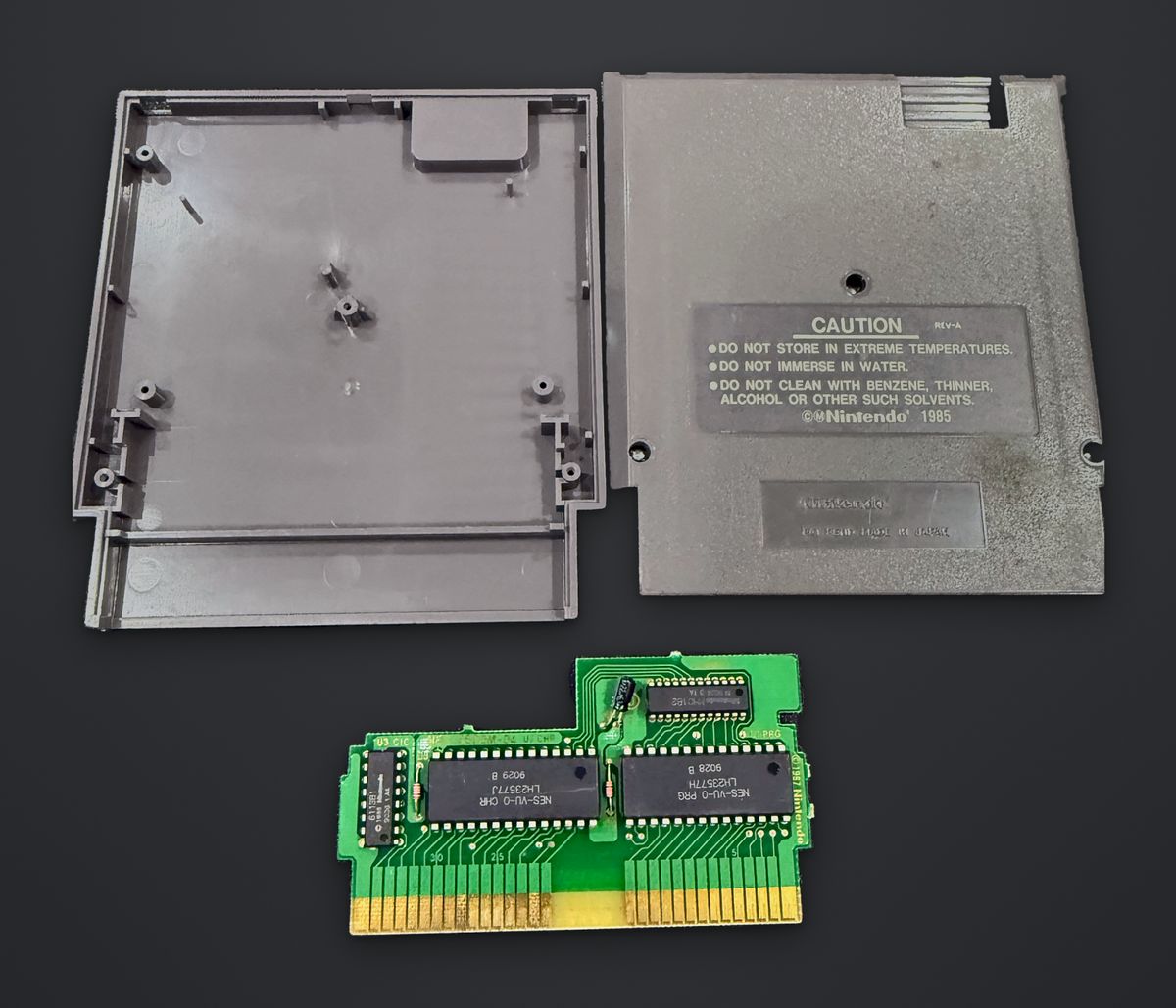
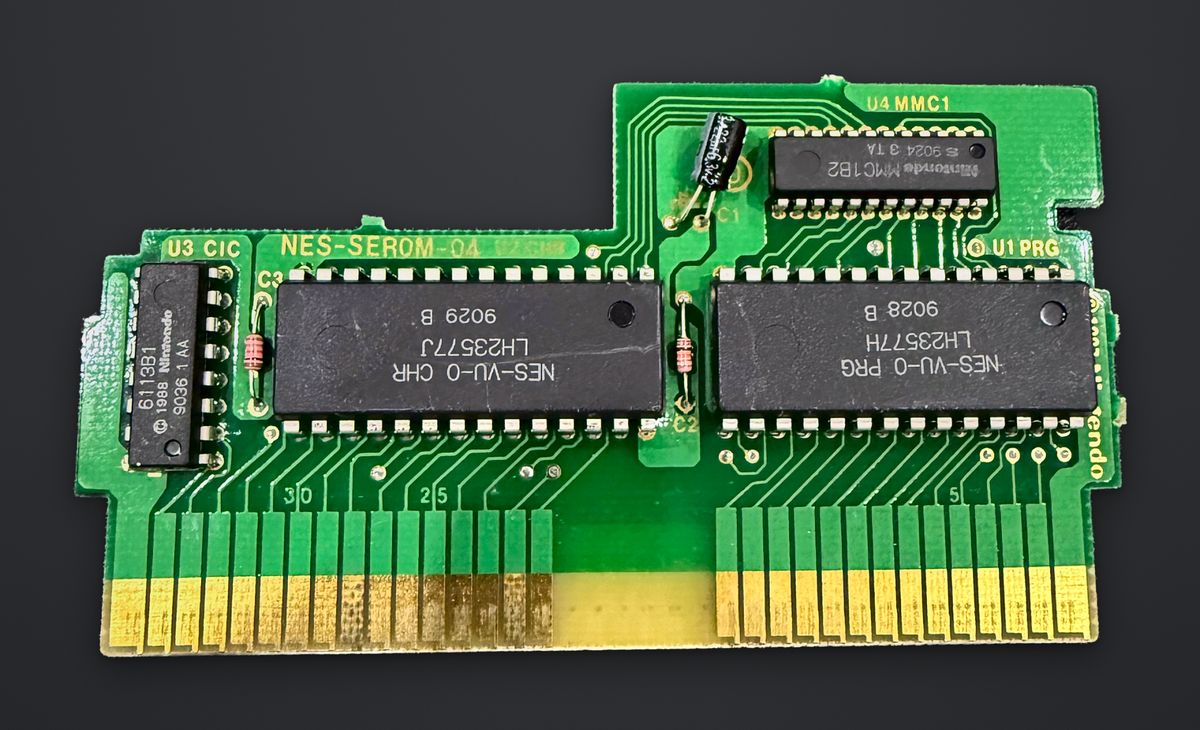
- 7The board code, NES-SEROM-04.
- 8Nintendo’s lockout chip, marked 6113B1, with two rows of 8 legs.
- 9A game chip printed NES-VU-0 CHR (the graphics).
- 10A game chip printed NES-VU-0 PRG (the program). VU matches the label code.
- 11Nintendo’s MMC1 chip, marked MMC1B2.
Opened up: The two shell halves and the board. NES boards are much smaller than the shell, and that’s normal.
 (opens the full-size picture in a new tab)
- The shell itself is copied or reused from a real game (yellow outline), so it proves nothing.
- Cross-head screws.
- A black epoxy blob in place of a game chip.
- Close-up: a replacement chip with a hand-soldered wire.
Our drawing shows a cheap fake, with the wrong screws and a blob. The more common NES fake is a real cart with new chips inside, so the screws are right and there’s no blob. Check the chip markings and the label instead, like numbers 9 and 10 on our board. The new chips are often programmable chips (EPROMs) with a small round window on top, usually hidden under a sticker. Newer fakes may use flash chips with no window.
Hardest to fake
- The chip codes match the label. A label coded NES-SD-USA should have game chips marked SD (for example NES-SD-0 PRG). The prefix can be NES or HVC (early games reused Japanese chips) and the last digit is a revision number. The two letters in the middle are what count.
- A Nintendo board code printed on the board (it starts with NES- or HVC-) and the right board type for the game. NesCartDB lists it for every title.
- A game chip printed with the game code and a date code, like NES-VU-0 PRG on our board. A plain black chip with no window isn’t enough on its own: some programmable chips have no window, and fakers can reprint chip markings.
Red flags
- Chips with a round window, or stickers or tape over chips. Look for 27C, 29F or 39SF anywhere in a chip’s part number, like M27C512 or AM29F040: those are programmable chips, which factory-made games don’t normally use.
- Wires, bent-up chip legs, hot glue, burn marks or damaged pads around the chips.
- Chip codes that belong to a different game, or a black blob on the board.
- The wrong game starts up. For example, a “Stadium Events” that boots “World Class Track Meet”.
- A label with square corners, a lamination edge you can see or feel, a finish shinier or duller than normal, blurry print, or misspelled small print.
- A label that looks like it was peeled off and put back: a crooked fit, glue at the edges, bubbles, or a fresh label on a very worn shell. Fakers sometimes move a real label from another cart.
- No back label, or a round Nintendo seal on a game made after early 1989, when Nintendo switched to an oval seal.
- A five-screw cart for a game released in 1989 or later, or cross-head screws on a later three-screw cart.
Proves nothing on its own
- A real Nintendo shell and board. Donor-cart fakes have both.
- A real Nintendo lockout chip. Donor boards keep theirs.
- The pressed number on the back label (top-left corner on many carts). Labels can be moved from one cart to another.
- A game that plays perfectly.
Normal on real games
- Ordinary screws (flat or cross-head) on an early cart. Many carts made from 1985 to about 1987 used them.
- Five screws on an early cart, made until about the end of 1987.
- A board year older than the game. The year belongs to the board design, and Nintendo kept using its designs for years.
- A missing or different seal on some early carts.
- Saves lost on Zelda or Kirby’s Adventure. The battery may simply be dead: it’s over 30 years old. Switching the power off without holding RESET can also wipe a save, and the manuals warn about it.
- A scuffed or slightly peeling label. These games are over 30 years old.
- Unlicensed games made without Nintendo, from companies like Tengen, Color Dreams, Camerica and AVE. They have no Nintendo board code or lockout chip, and their shells, labels and chips look different. Compare them with photos of that exact game.
- Modern licensed re-releases, like iam8bit’s 2018 Mega Man 2, built with new parts. Judge them against photos of that exact release.
Sure yours is real? See what we pay for NES games. Still not sure? Email us photos of the front, the back and the label.
How to tell if a Super Nintendo (SNES) game is fake
Super Nintendo games are faked often, especially the big role-playing games like EarthBound, Chrono Trigger and Final Fantasy III. On a North American cart the two screws are on the front, in the bottom corners, and the back has a second, smaller label with a number pressed into it. One shortcut catches a lot of fakes: if the game never came out on the Super Nintendo in North America, a US-style cart of it is a reproduction. That includes Terranigma, Seiken Densetsu 3, Final Fantasy V, Star Ocean, Bahamut Lagoon, Treasure of the Rudras, and anything titled “Final Fantasy VI” (it was sold here as Final Fantasy III).
A real one: our own Super Mario World
A genuine North American copy from our stock.
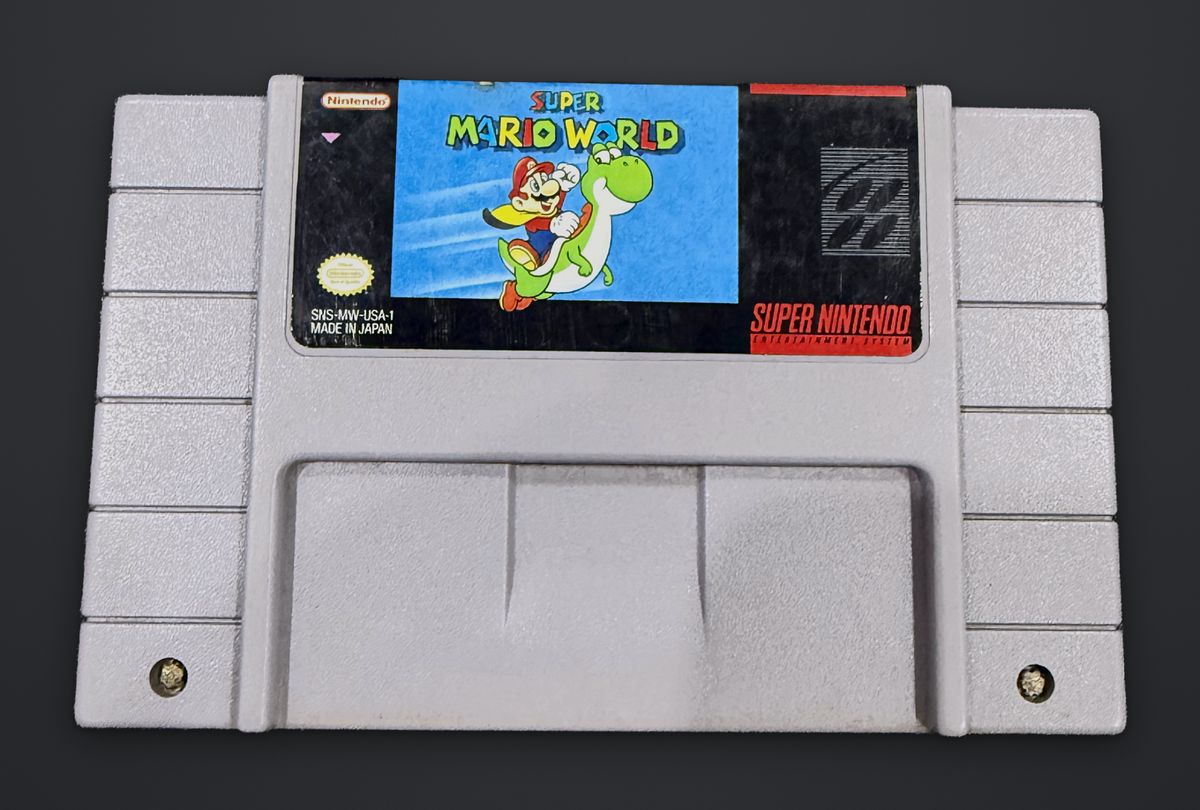
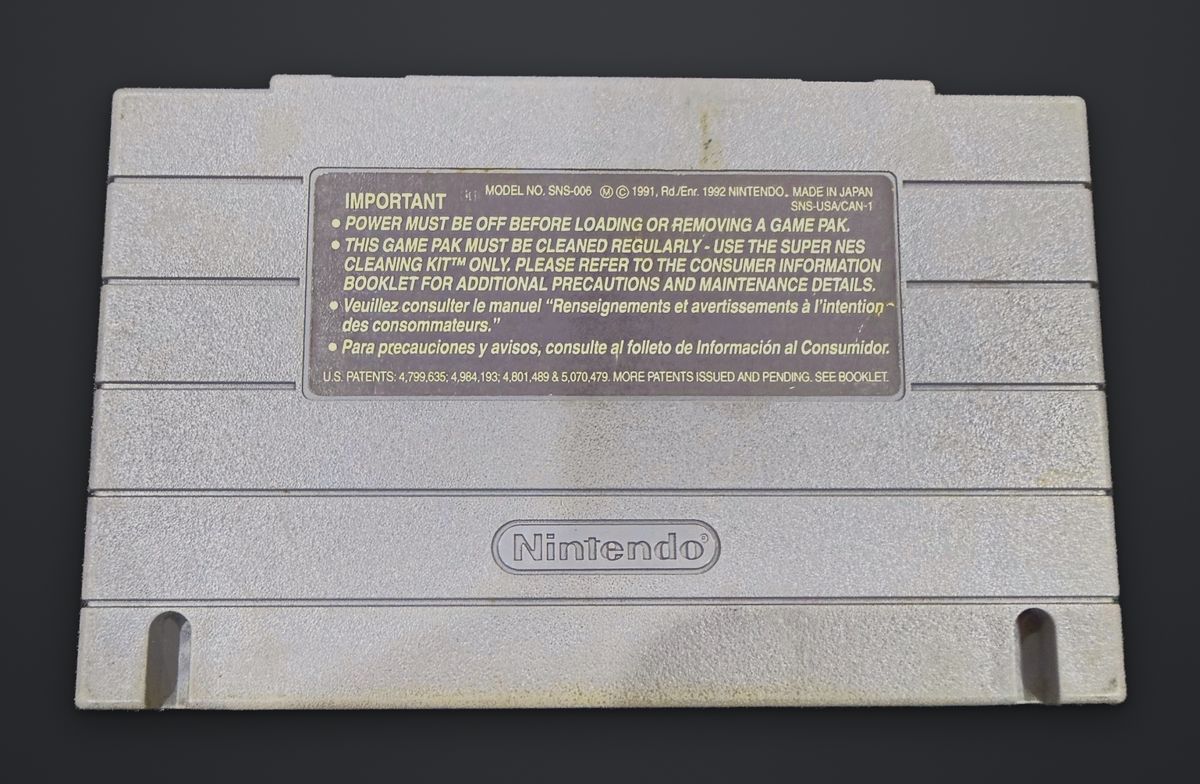
- 1Two security screws, on the front in the bottom corners (the other is on the right). US carts have none on the back.
- 2The label code, SNS-MW-USA-1, and MADE IN JAPAN. MW is Super Mario World’s code; it’s printed on the game chip too (number 8).
- 3The second label on the back: IMPORTANT, MODEL NO. SNS-006 and SNS-USA/CAN-1.
- 4A number pressed into the label, just left of MODEL NO. It’s very faint on this copy, which is normal.
- 5The molded Nintendo logo.
 Close-up from another of our Super Nintendo carts, where the pressed “01” is easy to see. It’s a dent you can often feel with a fingernail; a number in flat ink is a warning sign.
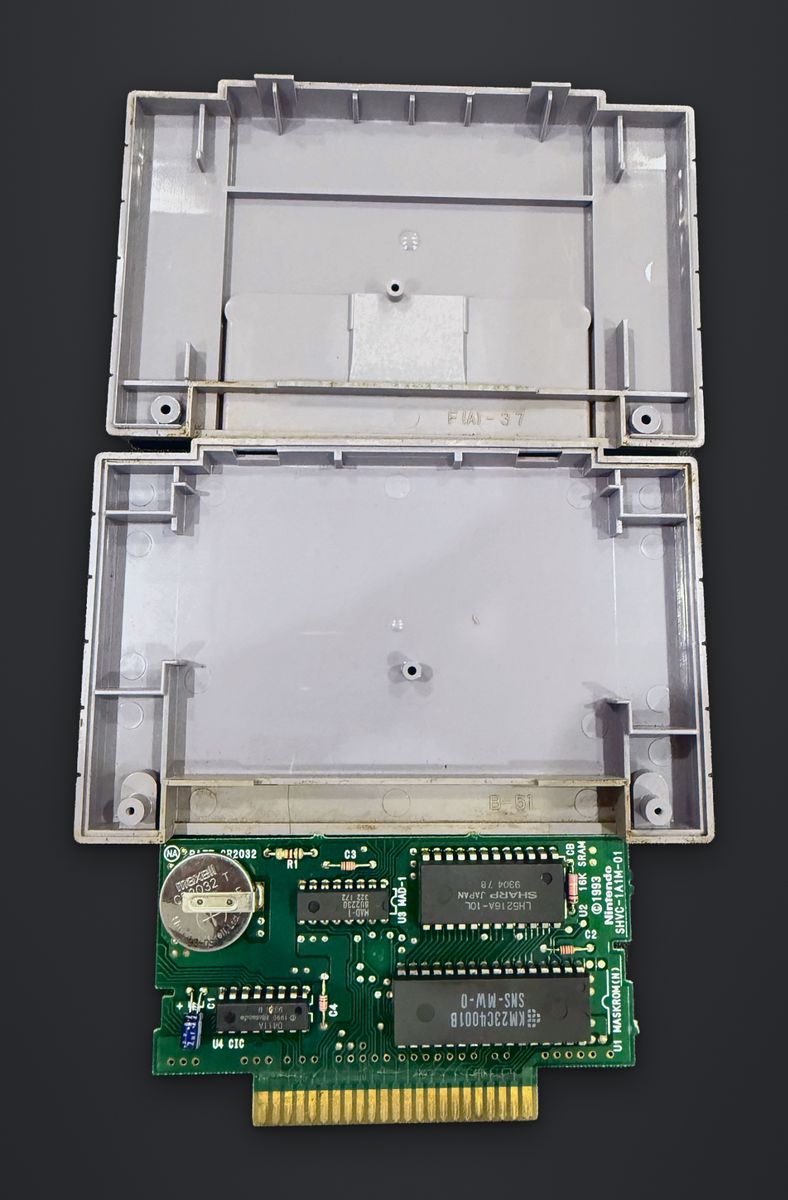
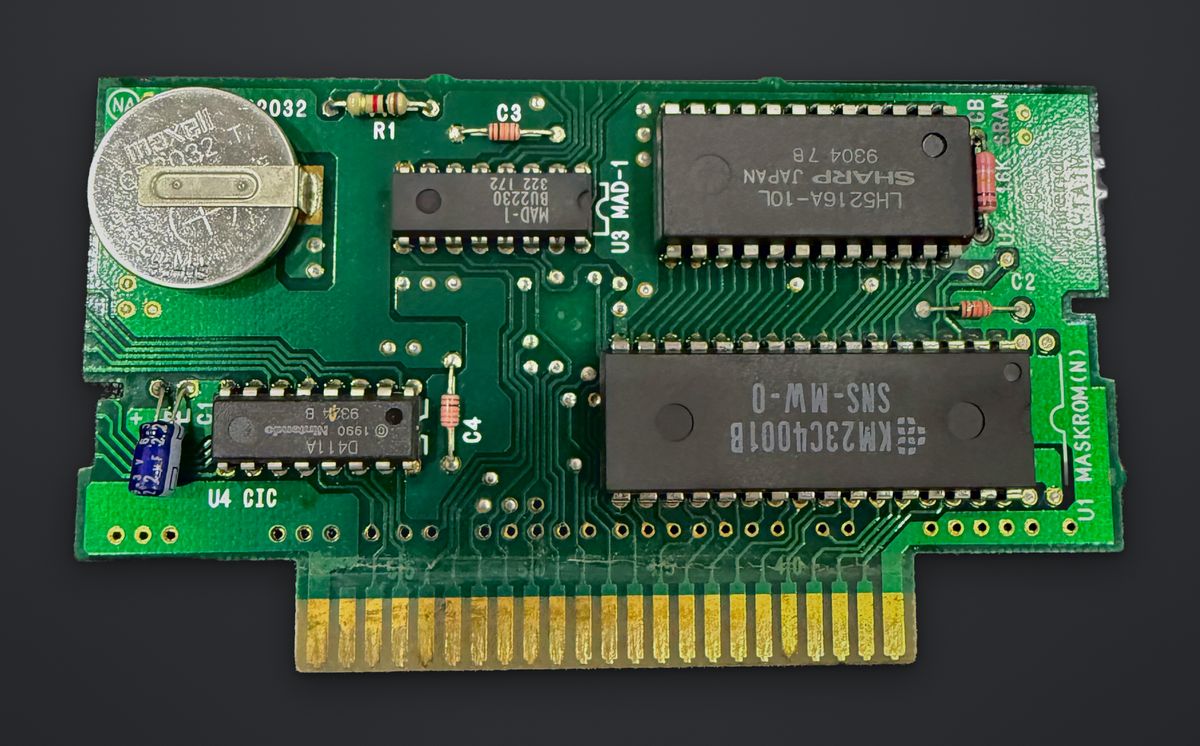
- 6Nintendo’s lockout chip, marked D411A and © 1990 Nintendo, with two rows of 8 legs.
- 7The save battery (a CR2032), held by a metal tab.
- 8The game chip, printed SNS-MW-0. It matches MW in the label code.
- 9Along this edge: Nintendo, © 1993 and the board code SHVC-1A1M-01.
Opened up: The two halves of the shell and the board.
One more check: the mold number inside the slot
Turn the cart over and look into the slot where the console plugs in, just above the gold contacts. Tilt it under a light.
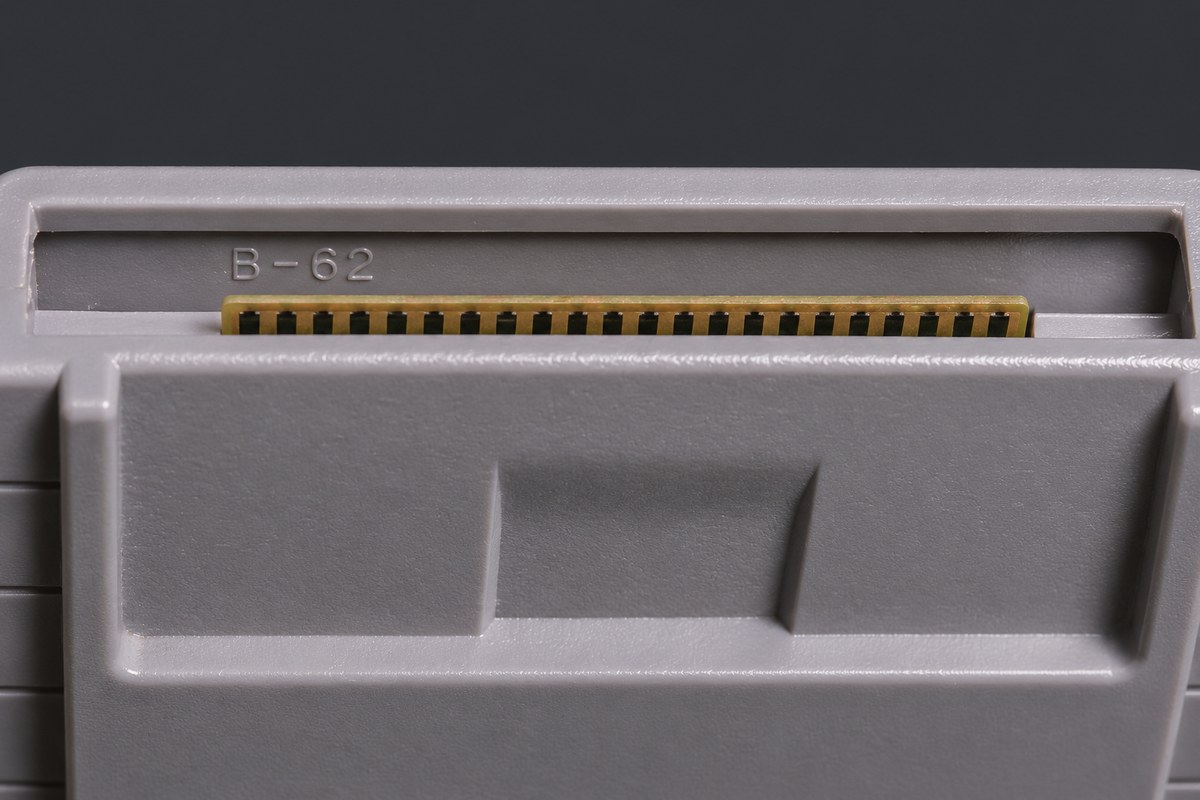
- 10Letters and numbers molded into the plastic, here B-62. They come from the factory mold, so they are the same gray as the shell and only show when light catches them. Each half of a real shell usually has one, on the wall above and below the contacts, and the exact letters and numbers change from cart to cart.
Inside the slot: Illustration, made from a real cartridge. Most fake shells have no mold number here. Having one is a good sign, not proof: some replacement shells have their own.
 (opens the full-size picture in a new tab)
Real (left)
- 1The board code, SHVC-1A0N-10. Nearly all US boards have one starting with SHVC-.
- 2Nintendo’s lockout chip, marked D411A and ©1990 Nintendo.
- 3The game chip, printed SNS-TM-0. TM is Turtles in Time’s code, the same as on its label (SNS-TM-USA).
- 4©1990 Nintendo printed along the edge of the board.
Fake (right)
- 5A modern flash memory chip (here SPANSION) holding the game, instead of a Nintendo game chip.
- 6A small programmable chip (here ALTERA), and no Nintendo lockout chip anywhere.
- 7A round spot for a battery, left empty. Fake makers use one generic board for many games, so it carries spots for parts this game never needs.
- 8No Nintendo name and no board code: only small print like DRV.
 (opens the full-size picture in a new tab)
Fake, outside
- Top: cross-head screws. Real carts use two metal 3.8 mm security screws.
- Bottom: a shiny back label with no pressed number.
Some late reprints, mainly Majesco re-releases assembled in Mexico, have the warning molded into the plastic instead of a back label, so compare with photos of that exact game.
Real boards vary in size and shade from game to game. Judge the chips and the markings, not the board’s size or color.
Hardest to fake
- “Nintendo”, a year and a board code on the board. Nearly all US boards have a code starting with SHVC-, so that’s normal on a US cart.
- The main game chip printed with the game’s code (EarthBound’s says SNS-MB-0). Check it on SNES Central.
- A genuine Nintendo lockout chip marked D411 or F411, often with a letter after it (like D411B). It has two rows of legs: 16 on the older, longer chip and 18 on the later, flatter one. A few games have no separate lockout chip because a special chip does that job, like Super Mario RPG, Kirby Super Star, Kirby’s Dream Land 3 and Street Fighter Alpha 2.
Red flags
- A US-style cart of a game that never came out on the Super Nintendo in North America.
- Cross-head or flathead screws, or plastic screws. Some fakes use plastic screws, or plastic shaped to look like a screw head. Every official Super Nintendo game is closed with two metal 3.8 mm security screws, never plastic.
- The rounded Japanese or European shape sold as a US cart.
- A very glossy, blurry or badly cut front label, or one with the wrong font or a cut-off logo.
- A back-label number that’s printed instead of pressed.
- No mold number inside the connector slot (letters and numbers like B-62 molded into the plastic above the contacts).
- Inside: programmable or flash chips holding the game, chips under stickers, blobs, wires or tape.
- No “Nintendo” anywhere on the board, or a game chip code that doesn’t match the label.
- A save game (EarthBound, Chrono Trigger, Zelda) with no battery. A replaced battery is common on real carts; tape or glue on it just means someone has been inside, so check the chips.
- A tiny 8-leg chip where the lockout chip belongs, or a European lockout chip (D413 or F413) in a US cart.
Proves nothing on its own
- The pressed number on the back label. Good fakes copy it. It only counts against a cart when it’s printed flat, or missing from a clean, unworn label. A faint number is normal.
- The label code (like SNS-ZL-USA), the seal and the ESRB rating.
- Security screws and the molded Nintendo logo on the back.
- A battery being present.
- A real special chip, an extra processor some games have (like Super Mario RPG’s SA-1). Fakers take them from cheaper donor carts.
- A game that plays. Saves that vanish are worth checking, but real 30-year-old batteries die too.
Normal on real games
- No back sticker on some late reprints, mainly Majesco re-releases assembled in Mexico. Those are real.
- EarthBound’s label missing “Made in Japan”. Every real copy has that misprint.
- Extra marks on the code, like “-1” or “-2” at the end (later printings, like our Super Mario World’s SNS-MW-USA-1).
- No battery in Star Fox. Its memory is for the game, not for saves.
- A few real boards with other codes, like MAXI-, MJSC-, WEI- or EA-. If yours looks unusual, compare it with photos of that exact game.
- Super 3D Noah’s Ark, an unlicensed game. It has no lockout chip, and that’s normal for it.
- Board size and shade that differ from game to game.
Sure yours is real? See what we pay for Super Nintendo games. Still not sure? Email us photos of the front, the back and the label.
How to tell if a Nintendo 64 (N64) game is fake
Zelda (Ocarina of Time and Majora’s Mask), Pokémon Stadium 2, Conker’s Bad Fur Day, Banjo-Tooie, Paper Mario, Smash Bros. and the Mario Party games are the usual fakes. Turn the cart over first: the back catches most cheap fakes. Some fakes hide a new board inside a real shell, though, so look inside if you can.
A real one: our own Perfect Dark
A genuine North American copy from our stock, down to the metal shield inside.
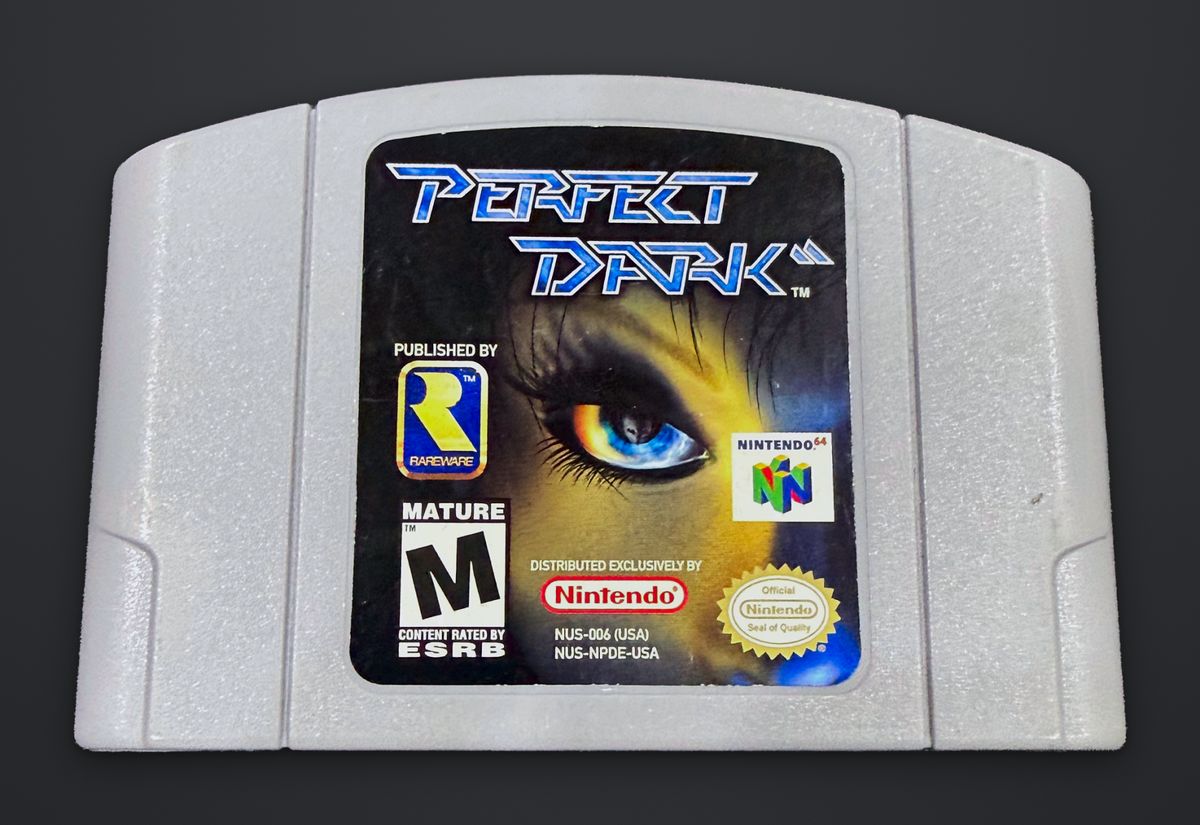
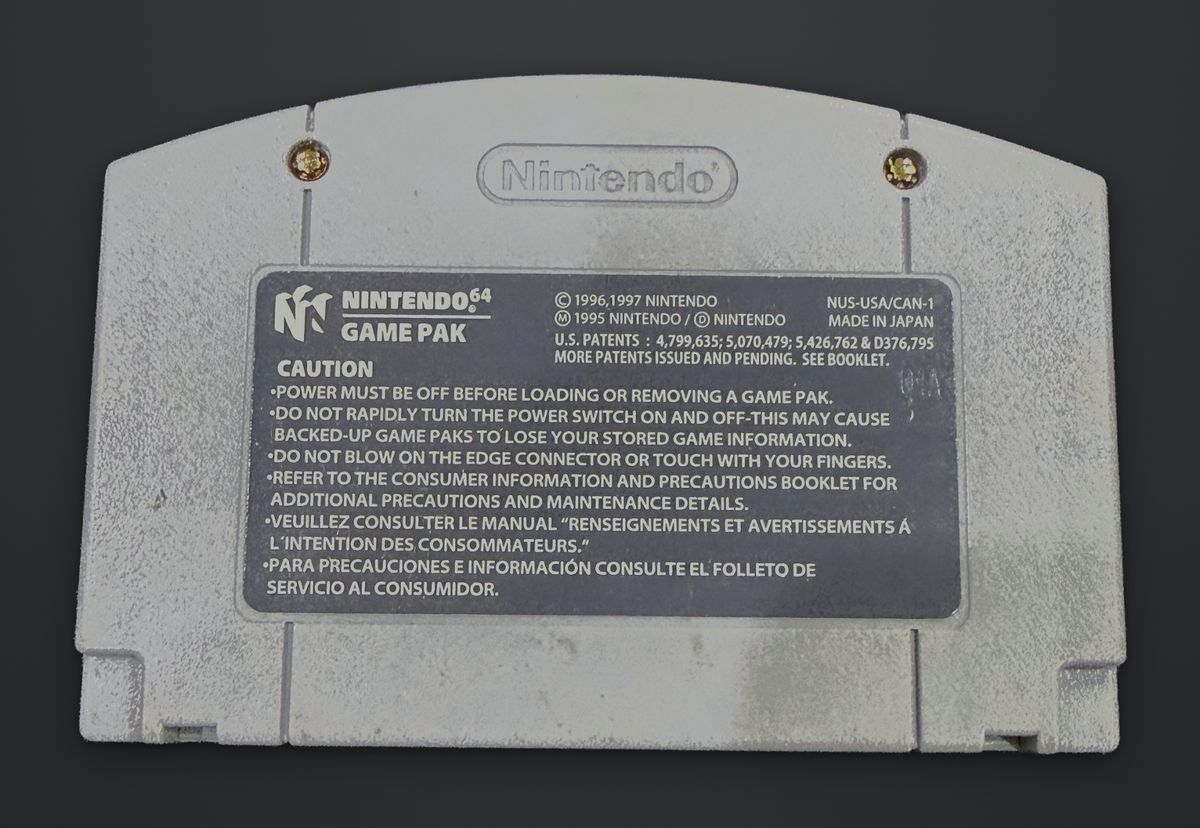
- 1The label code, NUS-NPDE-USA. NPDE is Perfect Dark’s code, and it’s printed on the game chip too (number 9).
- 2The Official Nintendo Seal. Its gold ink flashes as you tilt the cart.
- 3Two security screws, set down in deep holes.
- 4The molded Nintendo logo. On real carts it’s crisp, and the dot on the i is square.
- 5NUS-USA/CAN-1 and MADE IN JAPAN on the back label.
- 6“01A” pressed into the label near its right edge (close-up below).
 Close-up: the pressed “01A”, lit from the side.
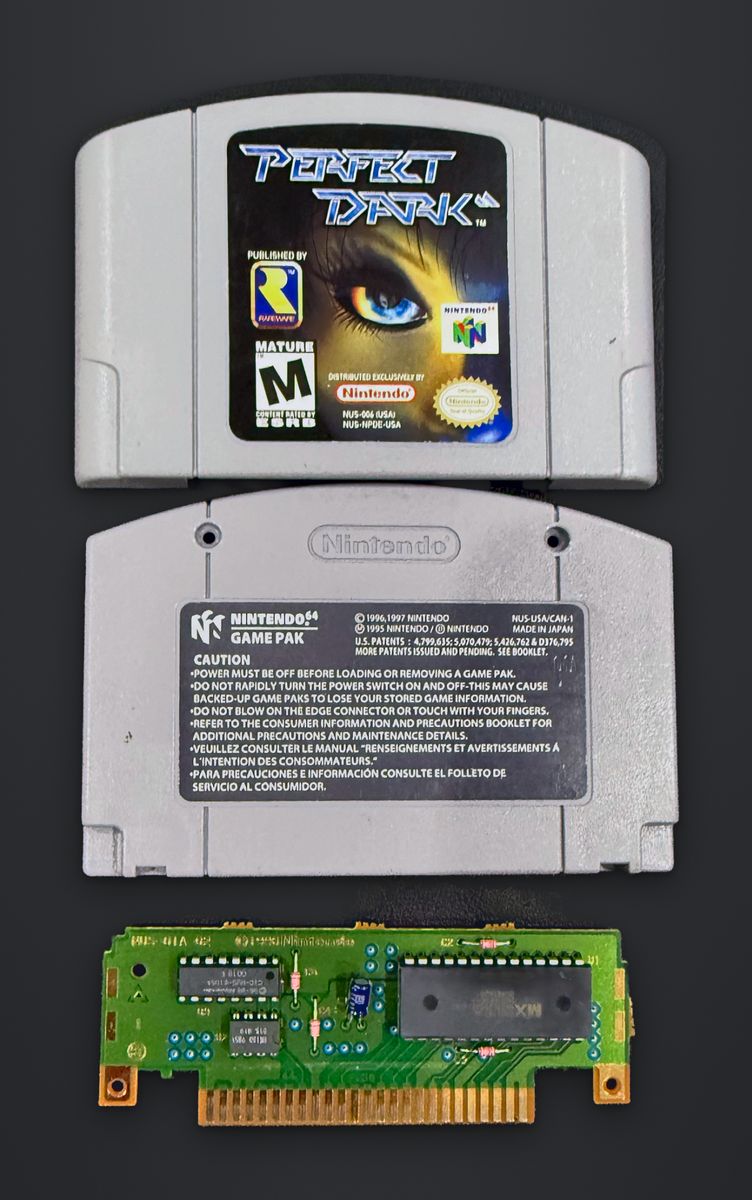
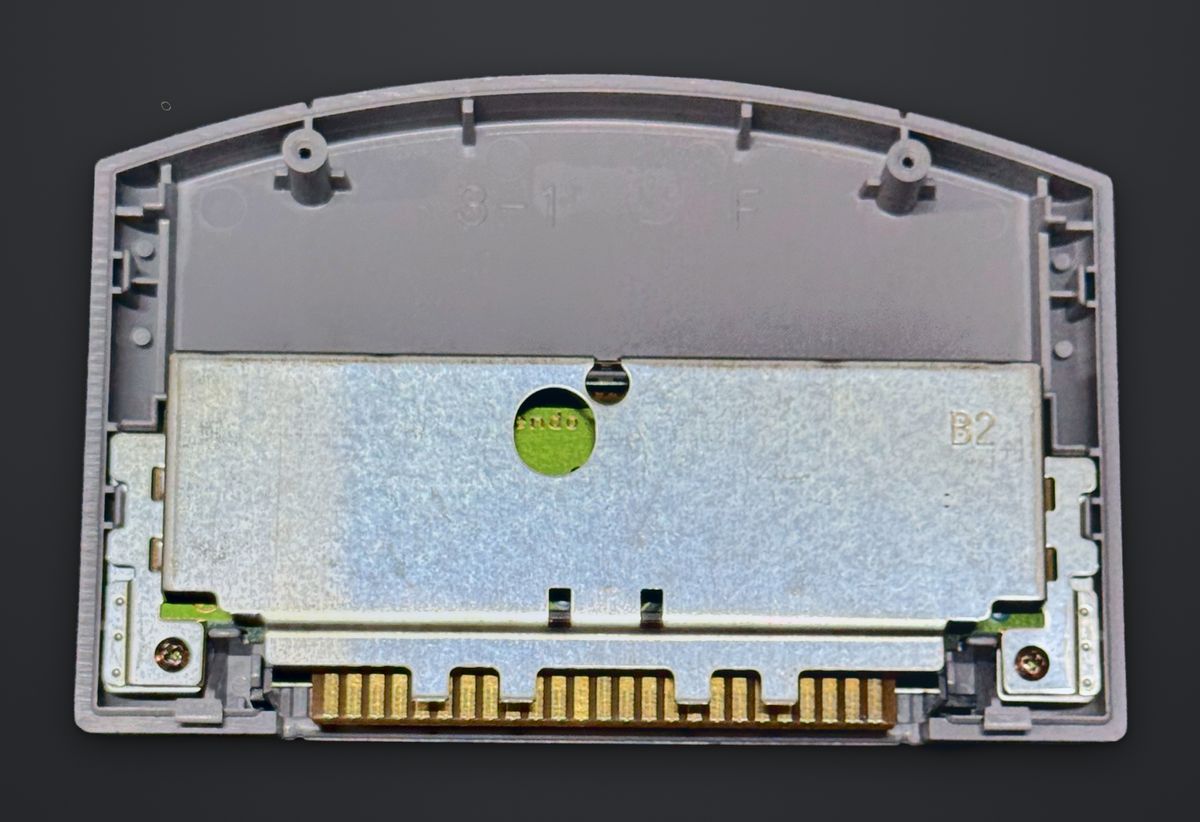
- 7A metal shield covers the board. Many fakes leave it out.
- 8Two ordinary cross-head screws hold the shield. Those are normal inside a real cart.
Opened up: The front, the back and the board. Inside the shell, a metal shield covers the board (number 7).
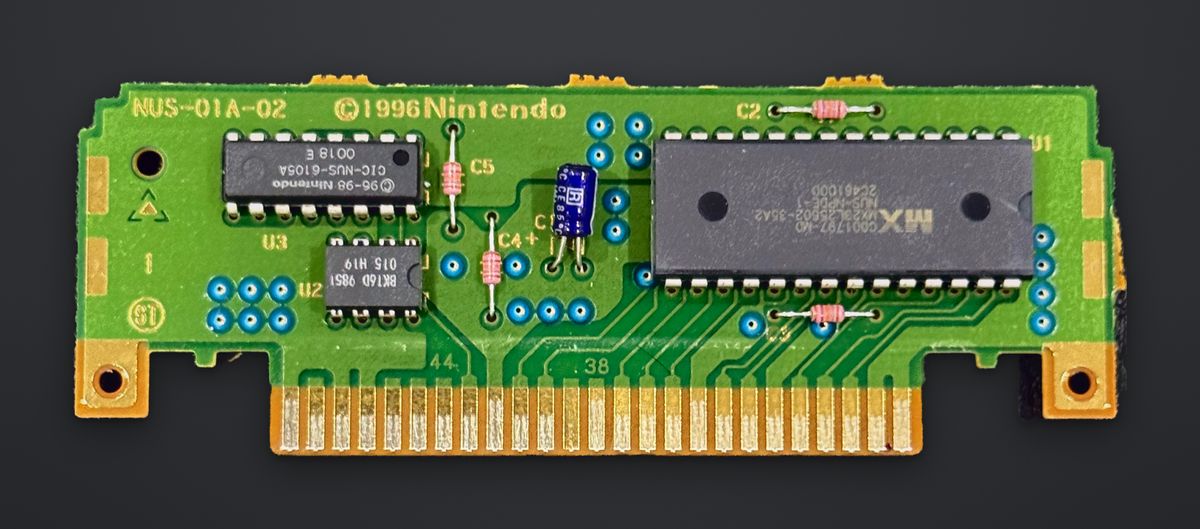
- 9The game chip, printed NUS-NPDE-1. NPDE matches the label code.
- 10Nintendo’s lockout chip, CIC-NUS-6105. Perfect Dark uses the 6105; most games use the 6102.
- 11A small 8-leg save chip. Perfect Dark saves without a battery.
- 12NUS-01A-02 and © 1996 Nintendo, printed on the board.
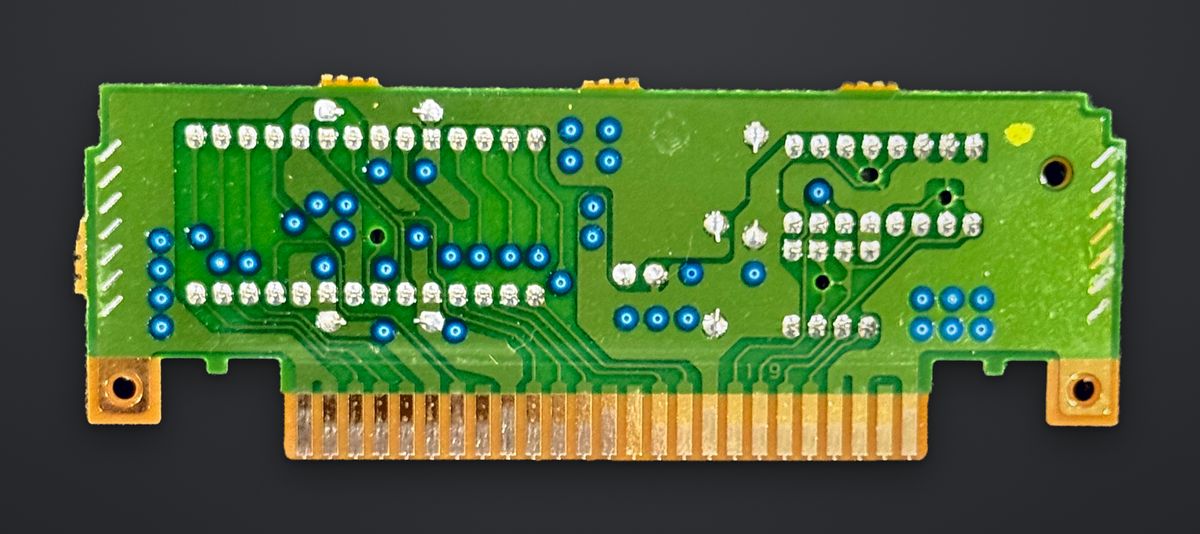
- 13The back: shiny, even factory solder, and no added wires or glue.
 (opens the full-size picture in a new tab)
Real (left)
- 1The lockout chip, marked CIC-NUS-6103A. The number after CIC-NUS changes by game.
- 2The Nintendo board code, here NUS-08A-01.
- 3©2000 Nintendo printed on the board.
- 4Letters and numbers molded into the shell, here USA B-2.
Fake (right)
- 5A board name like SF_TSOP_9 instead of a Nintendo board code. There is no “Nintendo” anywhere on this board.
- 6A programmable chip (here ALTERA), and no CIC-NUS lockout chip.
- 7Modern memory chips with very fine legs (here SAMSUNG and Winbond) instead of Nintendo’s game chips.
On the outside, fakes often have a shiny, glossy back label with no number pressed in, and cross-head screws instead of Nintendo’s security screws. A cross-head screw can also mean a real cart was opened for a battery change, so look inside before deciding.
| Game (US) | Label code | Save battery inside? |
|---|---|---|
| Zelda: Ocarina of Time | NUS-CZGE-USA (gold) NUS-CZLE-USA (gray) NUS-CZLE-USA-1 (gray Player’s Choice) | Yes |
| Super Smash Bros. | NUS-NALE-USA | Yes |
| Zelda: Majora’s Mask | NUS-NZSE-USA | No |
| Paper Mario | NUS-NMQE-USA | No |
| Pokémon Stadium | NUS-NPOE-USA | No |
| Pokémon Snap | NUS-NPFE-USA | No |
| Pokémon Stadium 2 | NUS-NP3E-USA | No |
| Banjo-Tooie | NUS-NB7E-USA | No |
| Conker’s Bad Fur Day | NUS-NFUE-USA | No |
| Mario Party / 2 / 3 | NUS-CLBE-USA NUS-NMWE-USA NUS-NMVE-USA | No |
| Super Mario 64 | NUS-NSME-USA | No |
| Perfect Dark | NUS-NPDE-USA | No |
The games in this table that have no battery save to a memory chip that needs no power. Many other N64 games have no save chip at all: they save to a Controller Pak memory card or don’t save, so a board with just the game chip and the lockout chip is normal for them. A US code ends in -USA. Japanese carts end in -JPN, European ones in -EUR and Australian ones in -AUS.
Hardest to fake
- The square dot on the “i” in the molded Nintendo logo, with sharp, crisp edges.
- The gold Official Nintendo Seal. Tilt the cart under a lamp: on a real one the seal flashes like metal, and the printing around it doesn’t. Even a scuffed seal keeps a little of that sparkle under a magnifier.
- Inside: a Nintendo lockout chip marked CIC-NUS and a number. The number depends on the game: most use 6102; Ocarina of Time, Majora’s Mask, Banjo-Tooie and Perfect Dark use 6105; Smash Bros. and Paper Mario use 6103. A different number in the 6100s isn’t a sign of a fake, and a letter after it (like 6105A) is normal. A number in the 7100s means a European board.
- The main game chip printed with the game’s code (on Super Mario 64 it starts with NUS-NSME), on a full-size Nintendo board.
Red flags
- Cross-head screws or missing screws on the outside (open it and check).
- Soft, rounded molding on the back.
- A very glossy front label (except on Majora’s Mask Collector’s Edition, below), or a flat, dull seal with no metallic shine.
- Inside: a little, newer-looking board with one plain, unbranded chip, any blobs or wires, or no metal shield.
- No CIC-NUS lockout chip on the board.
- An Ocarina of Time or Smash Bros. with no battery, or a battery in a game that never had one.
- A label code that doesn’t end in -USA (like -JPN, -EUR or -AUS) on a cart sold as American, or blurry, over-bright colors on the label.
Proves nothing on its own
- The pressed number on the back label. Fakes can copy it, and a few real carts don’t have one.
- The label code.
- A real shell. Some fakes put a new board inside a genuine shell.
- A game that starts and plays.
Normal on real games
- Two ordinary cross-head screws inside, holding the metal shield.
- A dead or replaced battery in Ocarina of Time or Smash Bros.
- A Player’s Choice logo, or a label code ending in -1 or -2 (like NUS-CZLE-USA-1). That’s a real Nintendo reprint.
- A gold cart. Real US Majora’s Mask carts are gold, and Ocarina of Time came in gold (Collector’s Edition) and gray.
- A shiny front label that changes as you tilt it, on a Majora’s Mask Collector’s Edition. The first copies came that way.
- A Japanese cart that won’t fit a US console. Japanese carts are shaped differently.
Sure yours is real? See what we pay for N64 games. Still not sure? Email us photos of the front, the back and the label.
How to tell if a Sega Genesis game is fake
Sega made its own cartridges, so the markings say Sega, not Nintendo. Castlevania Bloodlines, Contra Hard Corps, MUSHA and the Phantasy Star and Shining Force games are common targets, along with lots of cheap bootlegs. Genesis fakes are often light and flimsy, so pick the cart up and squeeze the seam gently before anything else.
A real one: our own Sonic Spinball
A genuine copy from our stock, published by Sega and assembled in the USA.
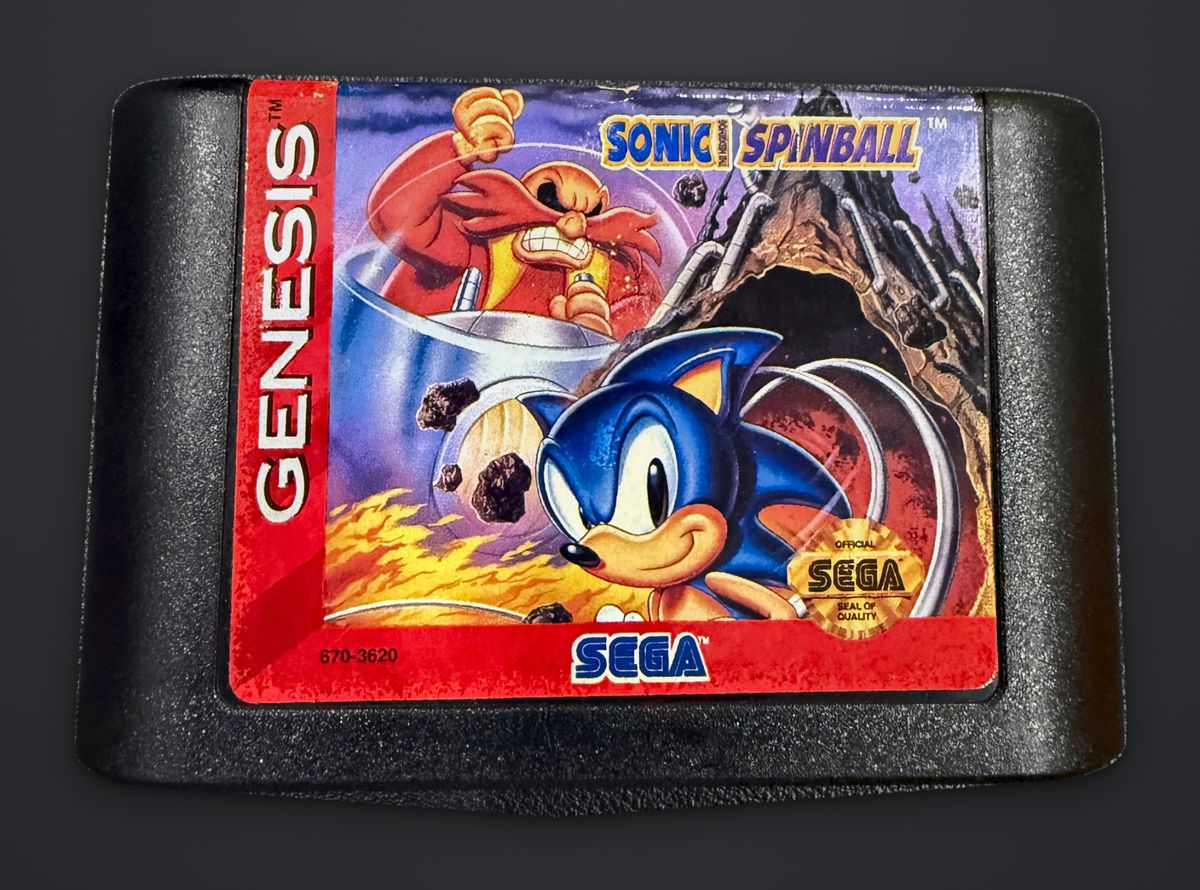
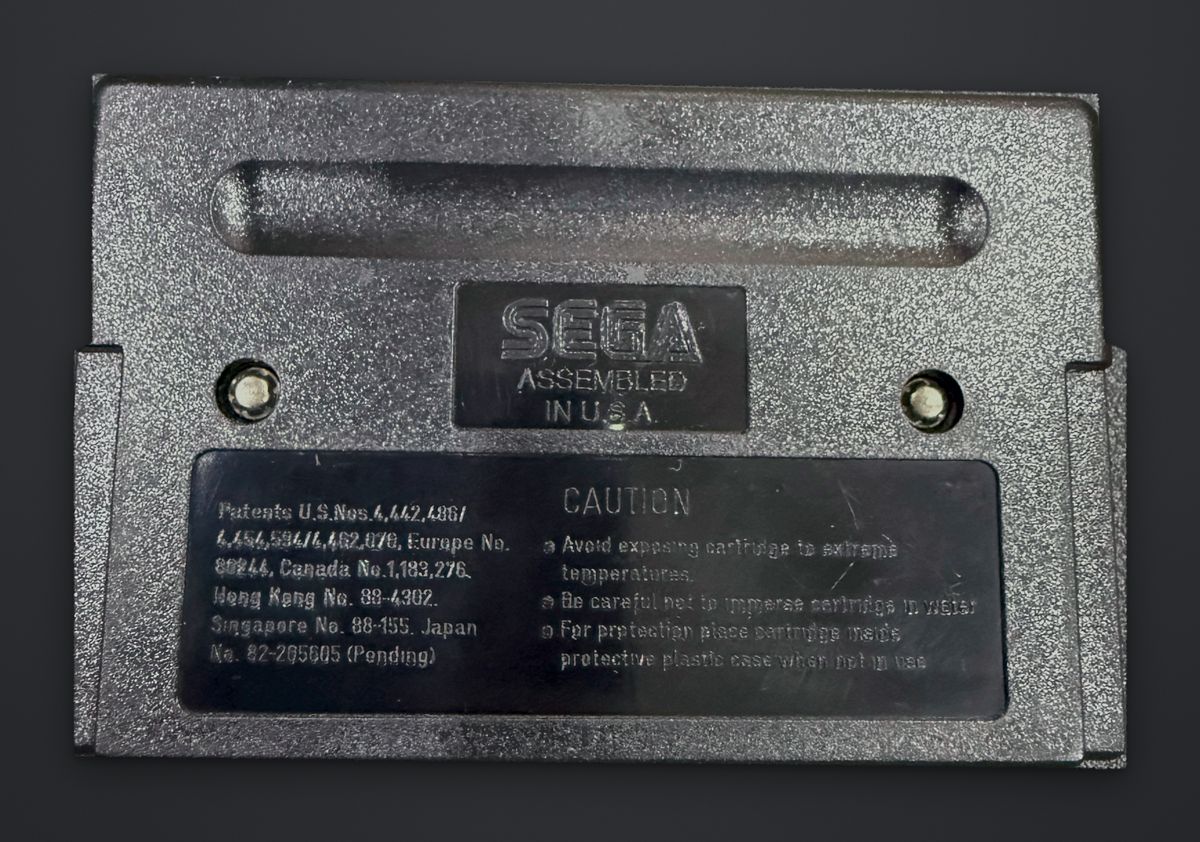
- 1The red GENESIS band down the side of the label.
- 2The Official SEGA Seal of Quality.
- 3Two security screws. Sega’s own cartridges use them.
- 4SEGA and ASSEMBLED IN U.S.A. molded into the back. This copy was put together in the US.
- 5The back label, with Sega’s patent numbers and the CAUTION notes.
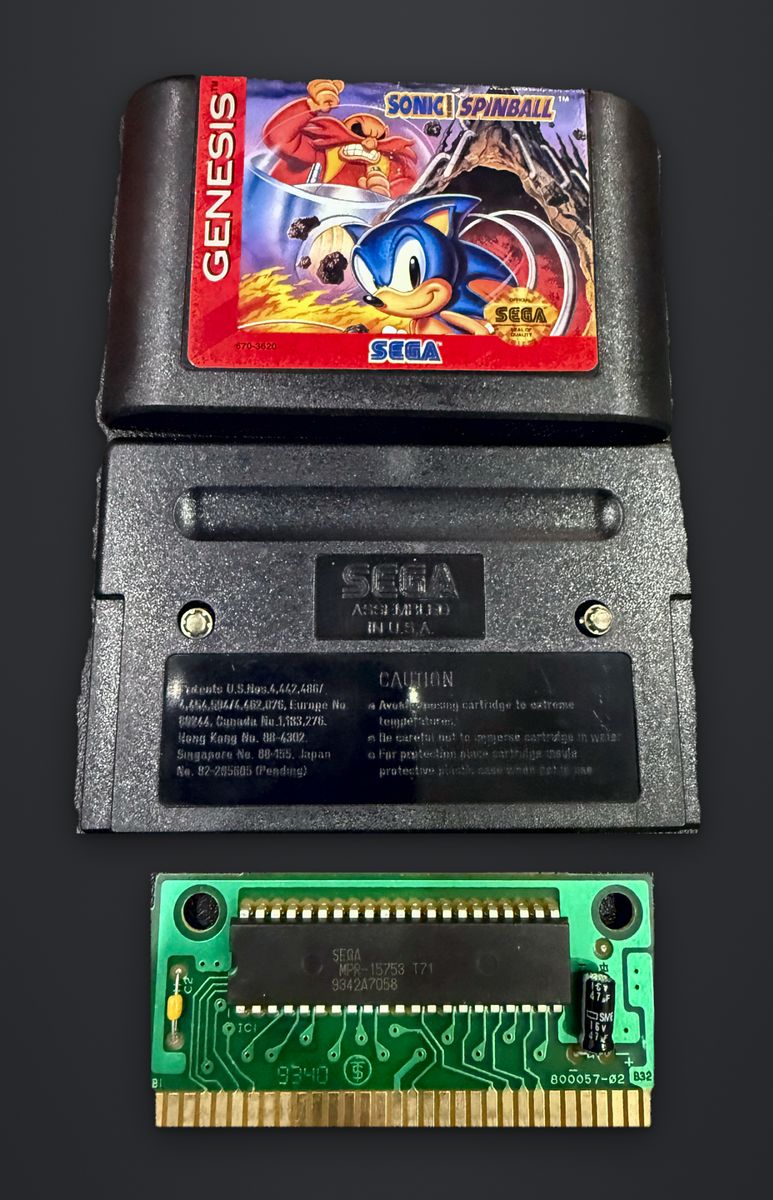
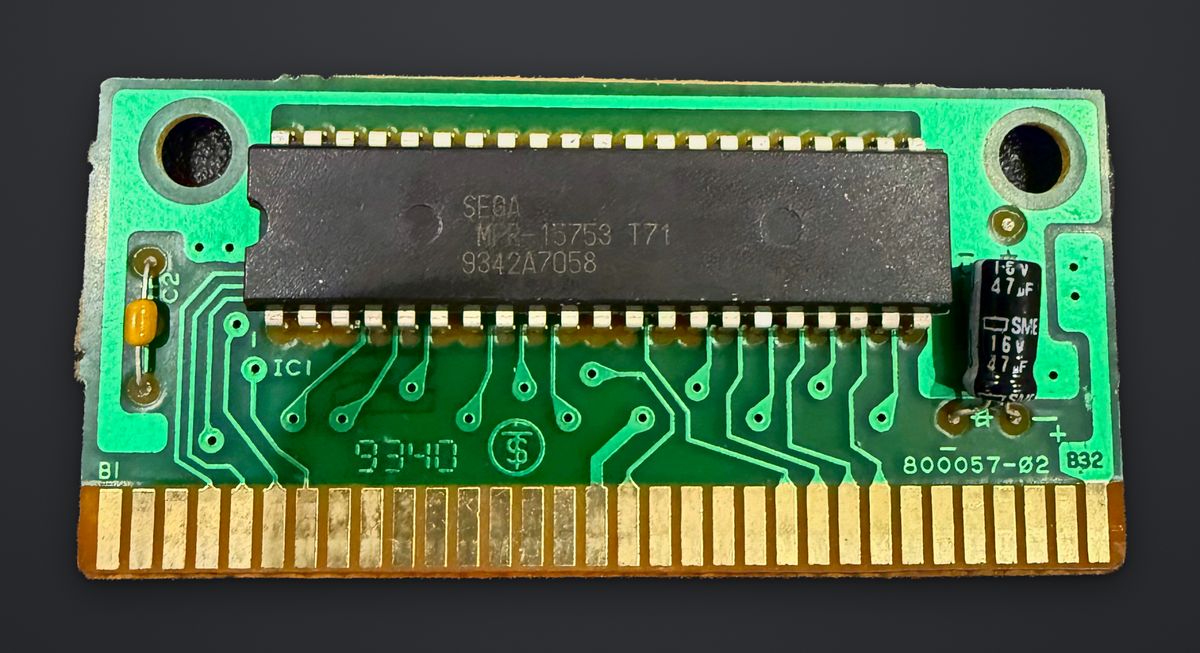
- 6The game chip, stamped SEGA and MPR-15753. Sega’s own games use chips marked MPR-.
- 7The board number, 800057-02. Many Sega boards are numbered 171-; this US-assembled one isn’t, and it’s real.
Opened up: The front half, the back half and the board.
 (opens the full-size picture in a new tab)
- Cross-head screws.
- A gap along the seam where the two halves don’t meet (red outline).
- A black epoxy blob in place of the game chip (close-up).
Most Genesis carts take a bigger bit (4.5 mm) than Nintendo carts (3.8 mm).
Hardest to fake
- On Sega’s own games: a game chip marked MPR-, usually with SEGA above it, and a Sega board number. Many start with 171- (Sonic 3’s board is 171-6656A); US-assembled carts can carry other numbers, like our Sonic Spinball’s 800057-02.
- The EA shell: most EA games come in EA’s own shell with a yellow plastic tab on the side.
Red flags
- On a cart in Sega’s standard shell: plastic nubs molded to look like screws, or no screws at all.
- Cross-head screws on a Sega-published game.
- A gap along the seam, or bendy plastic that just snaps together.
- The rounder Japanese shape with a US label.
- A blurry or oddly bright label, or a code for the wrong game or region.
- A battery in a game that doesn’t save, or a battery in Sonic 3 (it saves without one).
- A black blob on the board, unless it’s one of the Namco games below.
- A US Mega Man: The Wily Wars cart. It was never sold on a cartridge in North America, apart from Retro-Bit’s licensed 2021 re-release.
Proves nothing on its own
- The product code. Sega’s own games use a 4-digit number (Sonic 2 is 1051), and most other licensed publishers use a code starting with T- (Castlevania Bloodlines is T-95076). Look for it on the box and manual: the cart label may carry a different number, like the 670-3620 on our Sonic Spinball. Fakes can copy any printed code.
- The “Produced by or under license from Sega Enterprises Ltd.” screen at startup. Newer Genesis consoles show it for any cartridge carrying Sega’s code, real or fake, and early consoles never show it at all.
- Weight on its own.
- The box. Fakes reprint those too.
Normal on real games
- No Sega markings on games from publishers that made their own cartridges, such as EA, Accolade, Konami and Namco.
- A black blob chip on some Namco carts, like Splatterhouse 3. Namco built its own boards.
- Unusual screws on some carts Sega didn’t build, like EA’s and some Konami games.
- Re-release labels and later reprints that look different from the first printing.
- A dead save battery in Shining Force or Phantasy Star.
Sure yours is real? See what we pay for Genesis games. Still not sure? Email us photos of the front, the back and the label.
How to spot a fake NES Classic or SNES Classic
Nintendo’s little HDMI consoles, the NES Classic Edition (2016) and the Super NES Classic Edition (2017), often called the NES Mini and SNES Mini, sold out fast, and fakes filled the gap. The best copies look right on a shelf, so the checks that count are the serial number on the bottom and what you see when you switch it on. Both take under a minute.
A real pair
Genuine North American consoles, with the controllers that come in the box: one with the NES Classic, two with the Super NES Classic.
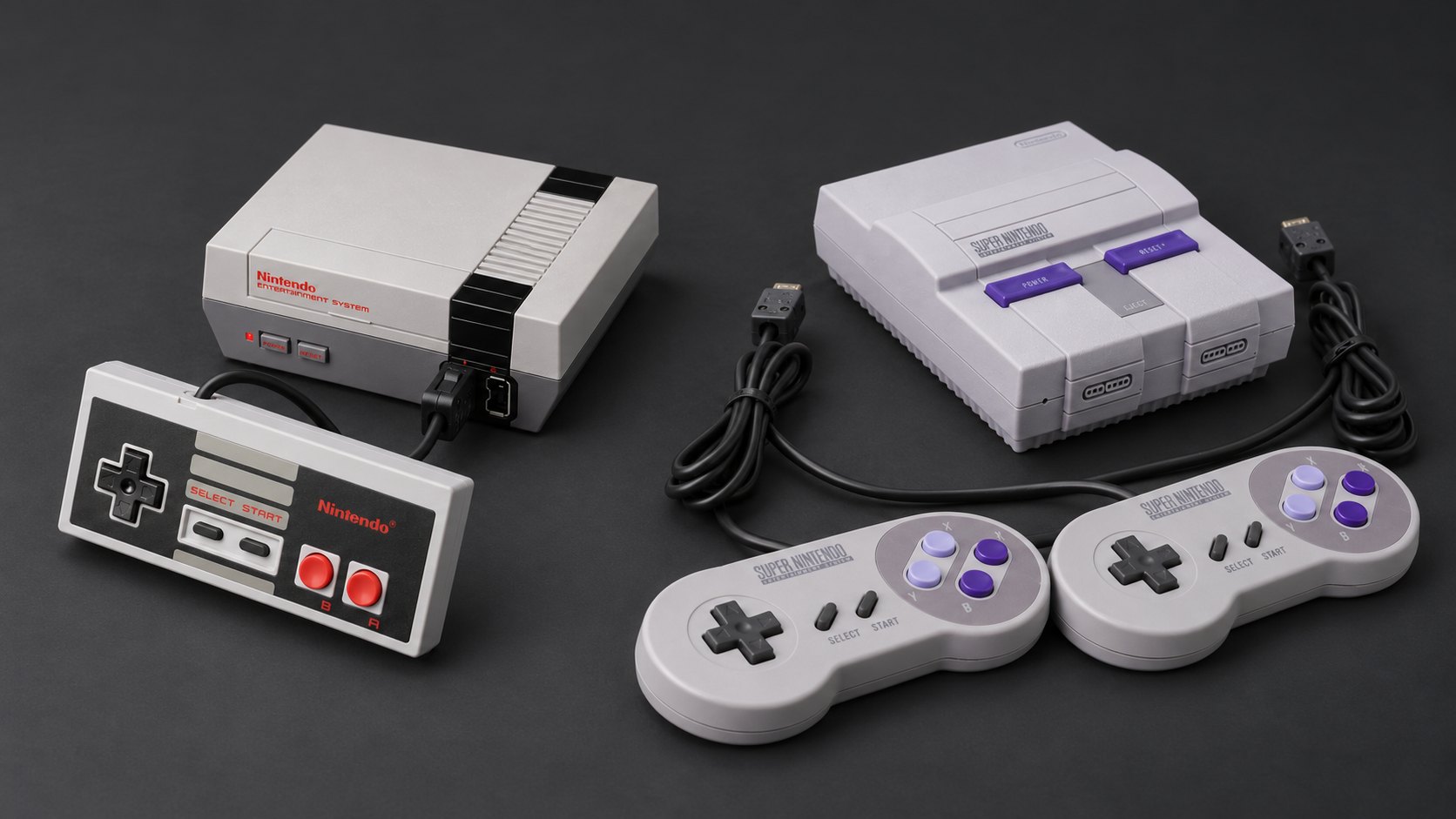
- 1NES Classic: the two controller ports are on the front.
- 2Super NES Classic: the North American one has straight edges and the gray and purple look. The European one is rounded.
| Check | NES Classic | Super NES Classic |
|---|---|---|
| 1. Flip it over. The serial number on the bottom starts with | CU, then nine digits | SU, then nine digits |
| 2. Switch it on. Games in the menu | Exactly 30 | Exactly 21 |
| 3. Look along the top of the menu | Display, Options, Language, Legal Notices and Manuals. Manuals shows a QR code. | The same five |
| 4. Press RESET on the console during a game | Back to the menu with a suspend point you can save, four per game | The same, and X on a suspend point rewinds the game |
| In the North American box | One controller, an HDMI cable, a USB cable and an AC adapter | Two controllers, an HDMI cable, a USB cable and an AC adapter |
Real serial numbers
Flip the console over: the serial number is on a sticker on the bottom. We blurred the last few digits.
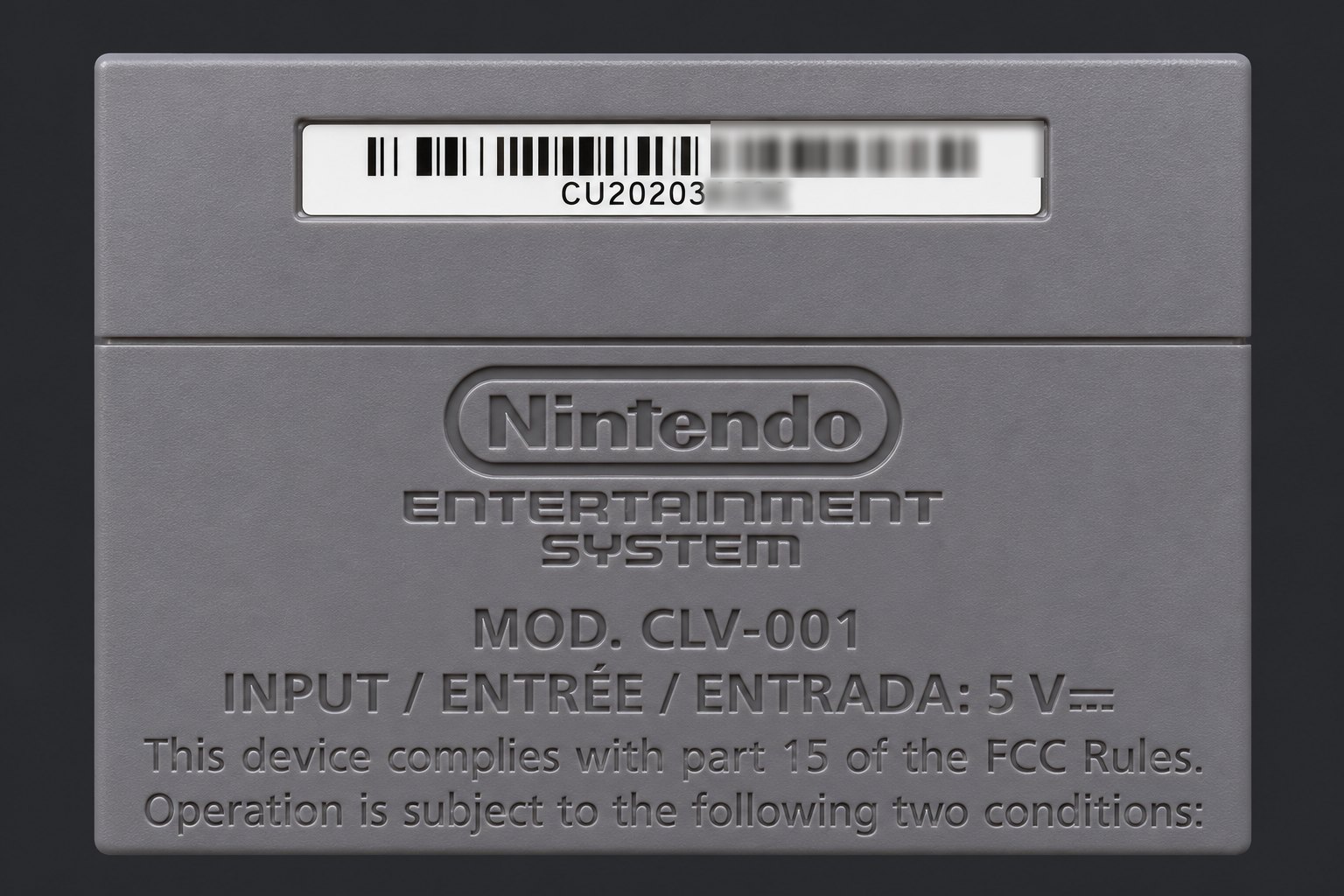
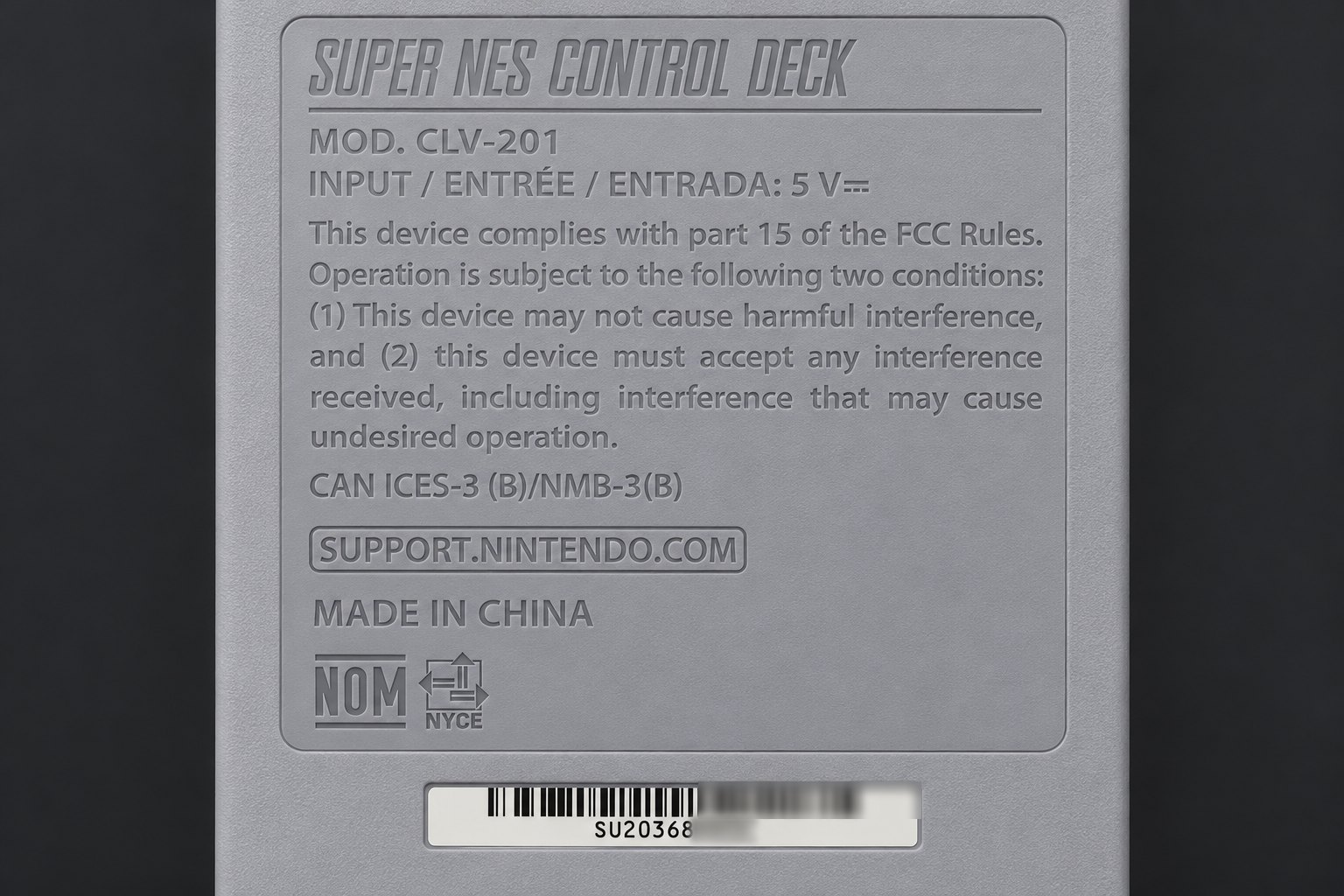
- 3NES Classic: the serial number sticker. CU, then nine digits.
- 4The model number, CLV-001.
- 5Super NES Classic: SU, then nine digits.
- 6The model number, CLV-201.
If your serial number doesn’t look like this, it could be a fake. A Super NES Classic with a number starting CU is a red flag, because CU belongs to the NES Classic, and one number, CU202496283, has been reported on fake NES Classics and has also turned up on a Super NES Classic, where no CU number belongs. Nintendo says any other start means a console made for another region: European ones start with CEE (NES Classic) and SEE (Super NES Classic). The right letters prove less than they seem, though, because fakes copy the format.
The real menus
What a genuine console shows when you switch it on.
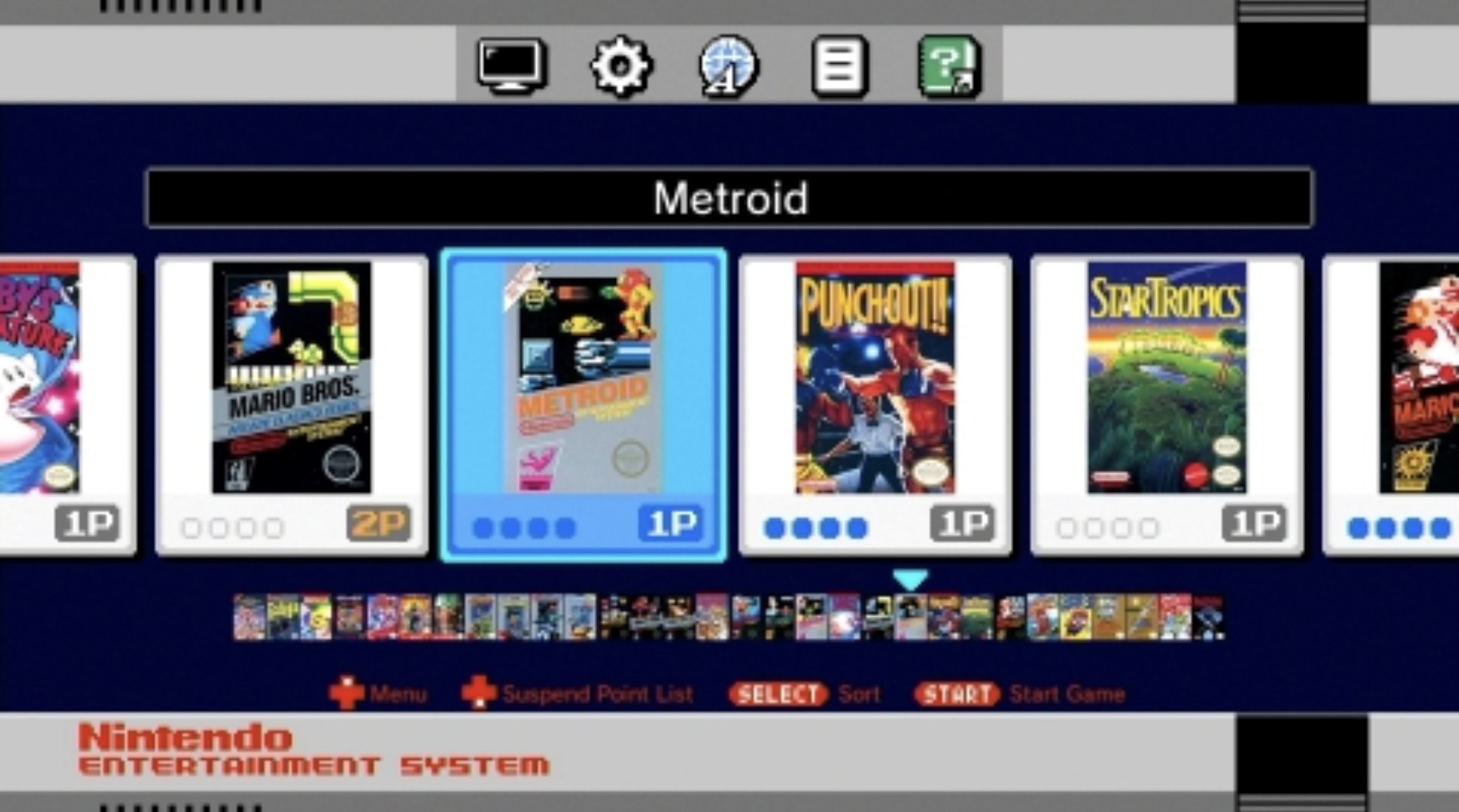
- 7Five icons along the top: Display, Options, Language, Legal Notices and Manuals.
- 8Four full game boxes across the screen, out of 30 games.
- 9The four circles under each game are its suspend point slots; filled ones are saved. You make one by pressing RESET in the middle of a game.
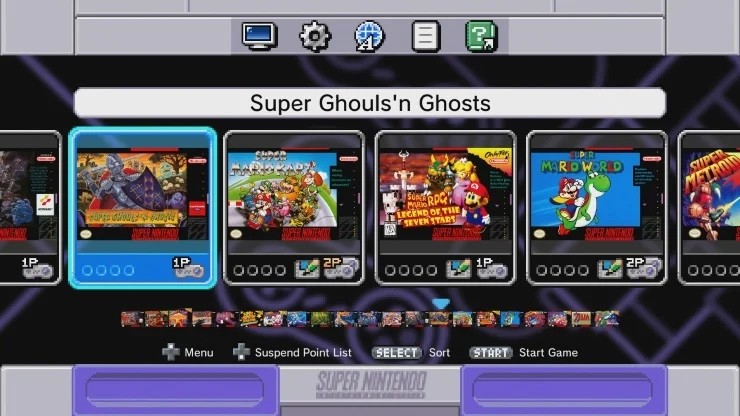
- 10The same five icons along the top. The Super NES Classic has 21 games.
- 11The same four suspend point slots under each game. Here a saved one can also rewind: pick it and press X.
If your menu looks different, it could be a fake. Fakes have shown hundreds of games or a colorful “Welcome” screen before the menu. The close copies are harder to spot: one NES Classic fake showed five game boxes across the screen instead of four, with slightly smaller text.
A test collectors use: the dark start. With the console plugged in and switched off, hold RESET in and switch the power on (press POWER on the NES Classic, slide it on the Super NES Classic). Keep holding RESET for about five seconds. A real one shows nothing on the TV, because its chip waits in a built-in recovery mode instead of starting. If yours starts up as normal, look harder at everything else. Afterward, switch it off and on again as usual.
Hardest to fake
- Nintendo’s menu, down to the details: five icons along the top, four full game boxes across the screen on the NES Classic, and suspend points with four save slots.
- Rewind on the Super NES Classic. An owner of a fake reported it missing.
Red flags
- A serial that doesn’t start with CU (NES Classic) or SU (Super NES Classic), or doesn’t have nine digits after the letters. CEE and SEE are the exception: real European consoles, which we don’t buy.
- CU202496283. A collector reported it on fake NES Classics, and on a Super NES Classic any CU number is wrong.
- Hundreds of games (fakes often list 620). That’s a fake or a real console someone has modded, and we can’t buy either.
- A colorful “Welcome” screen at start-up, or on an NES Classic, five game boxes across the screen instead of four.
- Suspend points that won’t save, no rewind on a Super NES Classic (the NES Classic never had it), or blank Manuals and Legal Notices screens.
- A memory card slot, or any port on the back besides HDMI and the small USB power port.
- On an NES Classic: a yellowish top, a crooked Nintendo logo, or ridges around the controller’s A and B buttons.
Proves nothing on its own
- A serial with the right letters and nine digits. Fakes copy the format.
- The box. The best fakes copy the packaging very closely.
- The shell and the ports, or working with Nintendo’s controllers. Close copies get these right.
Normal on real consoles
- A worn or partly peeled serial sticker on a used console.
- Star Fox 2 locked on the Super NES Classic. It opens once you clear the first stage of Star Fox.
- Other controllers or cables with a used console. Check the console itself.
Sure yours is real? See what we pay for the NES Classic and the Super NES Classic. Still not sure? Email us photos of the bottom and the start-up screen.
Fake disc games: PlayStation, Sega, Nintendo and Xbox
Discs are faked differently from cartridges. A fake disc is usually a copy, either burned at home or pressed by pirates, and on most consoles a copy won’t start unless the console has been modded: changed with a chip or a software hack so it plays copies. That makes the console itself a strong test.
There are two catches: a seller may have tested the disc on a modded console, and a few systems play copies with no mod at all. Since 2024 there’s also a PlayStation 1 fake that’s very hard to spot by eye. On a PS1, that makes the start-up test more important than ever. With discs, the packaging is often the bigger trap, too: reproduction cases, covers and manuals are sold openly and get paired with real or burned discs.
The disc check: six things to look at
Flip it over
Look at the shiny side, the one the laser reads. Its color tells you a lot (see the table below). A green, blue or purple tint usually means a disc burned at home, though real PS2 games on CD are blue to purple-blue.
Read the inner ring
Tilt the disc under a light. Factory discs have tiny codes molded into the clear ring around the hole, usually including the game’s own catalog number, the same code that’s on the label and the spine. A burned disc has only the blank disc maker’s code there, or nothing.
Check the printed side
Real labels are printed straight onto the disc and stay sharp down to the tiny legal text. Where the art leaves gaps, bare shiny disc shows through. A paper sticker, fuzzy inkjet print, handwriting or printed-on shine means a copy.
Match it all up
The title and catalog number on the disc should match the spine and the back of the case. On a game with several discs, only disc 1 matches; the others usually count up from it. A cheaper reprint, like a Greatest Hits disc, in a first-print case is a real disc in the wrong case, not a fake.
Look at the case and manual
Blurry text, the wrong shine on the paper or a fuzzy rating box all point to a reproduction. A real case proves nothing about the disc inside, because empty original cases are sold too.
Start it up
On most systems a copy won’t start on an untouched console. It’s only a fair test on a console you know hasn’t been modded, and it proves nothing on a Sega CD, a 3DO or most Dreamcasts.
| System | The shiny side of a real disc | Good to know |
|---|---|---|
| PlayStation 1 | Black | Black isn’t proof: black blank CD-Rs and newer black fakes exist. A few later Square Enix reprints are silver and still real. |
| PlayStation 2 | Blue to purple-blue (games on CD), or silver to faintly gold (games on DVD) | Both are real. Know which one your game should be. |
| PS3, PS4, PS5 | Silver (Blu-ray) | No fake discs documented. Check the right disc is inside. |
| PSP | A small disc sealed in a plastic shell (UMD) | Blank UMDs were never sold, so they can’t be burned at home. |
| Sega CD | Silver | Some blank CD-Rs look silver too. Read the inner ring. |
| Sega Saturn | Silver, with a ring bearing the SEGA logo near the outer edge | No outer ring means it isn’t a Saturn pressing. |
| Dreamcast | A darker band inside and a clearer band outside, with a ring between them | A burned copy has a dye tint and no ring of Sega text. |
| GameCube | A small 8 cm disc with a barcode-like ring near the hole | Every GameCube game is on a small disc. |
| Wii | Full size, with the same barcode-like ring near the hole | A burned DVD has no barcode ring. |
| Wii U | Full size, with a rounded-off rim | A sharp-edged disc isn’t a Wii U disc. |
| Xbox | Silver or faintly gold, usually with XBOX, Xbox logos and the word GENUINE in the inner ring | A burned DVD has none of these. |
| Xbox 360, Xbox One | Silver or faintly gold (Xbox One games are on Blu-ray) | No working copies known on Xbox One. |
Black CD-Rs pass the first check, so read the ring and the label too. The newer black PS1 fakes can look right on all three, so start those on a PS1 you know is untouched.
A copy won’t start without a mod
PlayStation 1, 2 and 3, Sega Saturn, GameCube, Wii, Wii U, Xbox, Xbox 360 and Xbox One. On these, a disc that starts on a console you know is untouched is very likely real. One exception: on a PS2, a specially made copy can start through the DVD movie player.
A copy plays with no mod at all
Sega CD, 3DO and most North American Dreamcasts: any with a circled 0 or 1 next to NTSC on the bottom sticker, and early ones marked 2. On these, a disc that plays proves nothing.
Mods can’t always be seen from outside. A Saturn plays copies with a re-flashed cheat cartridge in its slot, some PlayStation 2s run them from a special memory card, and a seller’s console may have a chip inside. So “tested and works” from a seller tells you little. Test on your own console.
Fake PlayStation games
PlayStation 1 games are the discs most worth checking. Real PS1 discs are black underneath, apart from a few later Square Enix reprints, and carry a hidden license code from Sony that a CD burner can’t copy. That’s why a copy won’t start on an untouched PS1. PS1 fakes come in four kinds:
Burned CD-Rs
Blue, green, gold or silver underneath, with a sticker, inkjet or handwritten label. Easy to spot.
Black CD-Rs
Blank discs made black to pass as PlayStation discs. Face down they look right, but the label usually gives them away, and the inner ring has no catalog number.
“Hong Kong silvers”
Older pirate copies, pressed in a factory, with a silver underside. A silver PS1 disc is a red flag. The known exception is a few later Square Enix reprints, like Final Fantasy IX and Chrono Cross: those are real and start on an untouched PS1. Pirate silvers don’t.
Black pressed fakes
Sold openly online since 2024, some with manuals. A factory presses them on black discs, so your eyes alone may not catch one. The start-up test will: they won’t load on a PS1 that has never been modded.
Reading a PS1 game
- Region. US games have catalog numbers starting SLUS or SCUS and say NTSC U/C on the disc and case. A European code (such as SLES) or a Japanese one (such as SLPM) means an import: real, but it won’t start on a US console.
- Black label or Greatest Hits. First prints have a black spine. Sony’s cheaper Greatest Hits reprints have a green spine and the Greatest Hits mark on the disc. Both are real.
- What gets faked. Common games as well as rare ones, so a cheap game isn’t automatically safe. Any boxed Thrill Kill is fake, because it was never sold in stores.
PlayStation 2 to 5, and PSP
- PS2. Blue to purple-blue underneath means the game is on a CD; silver means a DVD. Both are real. A DVD game with a purple, blue or green tint is a burned copy. A faint gold look can be normal, because many real dual-layer discs have it, so read the inner ring before you decide. Worn PS2s often fail on blue discs first, so a blue disc that won’t load isn’t proof of a fake. Be wary of a game disc that starts through the DVD movie player: that’s a trick for running copies.
- PS3, PS4, PS5. No fake game discs are documented. The risk is what’s inside: a sealed PS5 game ordered from Target’s website in 2025 held a plain CD with a copied label.
- PSP. UMDs can’t be burned at home, and no fake UMD games are documented. Check the right UMD is in the case and the shell isn’t cracked.
Sega CD, Saturn and Dreamcast
Sega CD
Its only protection is a region check, so a burned copy plays on an untouched Sega CD. Judge the disc instead: a real one has its label printed on the disc and codes molded into the inner ring. Some CD-Rs look silver underneath, so a silver disc alone proves nothing. Pricey games like Snatcher deserve the closest look.
Sega Saturn
A real disc has a ring bearing the SEGA logo near the outer edge of the shiny side, and the Saturn checks it at start-up. A burned copy has none, so it won’t start on an untouched Saturn with an empty cartridge slot. Repro cases with copied art are sold for Panzer Dragoon Saga, so check the discs as well as the case.
Dreamcast
A real disc looks like no ordinary CD. The inner part is darker, the outer part is clearer, and a thin ring between them carries Sega’s licensing notice. A burned copy has a dye tint and no ring of Sega text. Most US Dreamcasts play burned copies, so playing proves nothing. On US releases the manual is also the front cover.
Never released in the US: Shenmue II and Ikaruga on Dreamcast, and Radiant Silvergun, Grandia and Shining Force III Scenarios 2 and 3 on Saturn. An English, US-style copy of any of these is a reproduction or an import with new art. Sega’s own Saturn demo discs called “Bootleg Sampler” are real: the name was Sega’s joke.
GameCube, Wii and Wii U
GameCube
Every GameCube game is on a small 8 cm disc. Tilt one under a light and you’ll see a barcode-like ring near the hole, cut by a laser no home burner can match. Copies won’t start on an untouched GameCube. The usual problem is the case: reproduction covers and cases are common, often around a real disc.
Wii
Full-size discs with the same barcode-like ring near the hole. Copies won’t start on an untouched Wii, and modded ones usually play copies from a USB drive rather than a disc. Nintendo Selects copies are real reprints of popular games, not fakes.
Wii U
Run a finger around the rim. A Wii U disc feels rounded off, while a regular disc has a sharp edge. So a sharp-edged disc in a Wii U case isn’t a Wii U game. No fake Wii U discs are documented: modded consoles play copies from storage, not from burned discs.
Xbox, Xbox 360 and Xbox One
Xbox
Hold a real disc to the light. On most real discs, the inner ring repeats the word XBOX with Xbox logos and the word GENUINE, with a barcode and code numbers further out. A burned DVD has none of it, and won’t start on an untouched Xbox.
Xbox 360
A copy only plays on a 360 that has been modded, usually by reprogramming its disc drive, which you can’t see from outside. On an untouched console it won’t start. Platinum Hits copies, which came in silver cases, are real reprints.
Xbox One
No fake discs or working copies are known, and the console checks the disc even after a game is installed. What’s worth checking is the contents: the right game, the right edition, and a disc in the case at all.
Hardest to fake
- Starting up on a console you know is unmodded. It counts on the PlayStation, Saturn, Nintendo and Xbox systems on this page, but proves nothing on a Sega CD, a 3DO or most Dreamcasts.
- The codes molded into the inner ring, including the game’s own catalog number.
- Marks only a factory can make: the Dreamcast’s two bands, the Saturn’s outer ring, the GameCube and Wii barcode ring, and the GENUINE ring on Xbox discs.
Red flags
- A dyed tint underneath, like the green, blue or purple of a blank disc. PS2 games on CD are the exception: real ones are blue to purple-blue.
- A sticker, inkjet or handwritten label, or white print where a real disc would be bare and shiny.
- An inner ring with no codes, or only a blank disc maker’s code.
- A silver PlayStation 1 disc that isn’t a Square Enix reprint, or a GameCube game on a full-size disc.
- A disc whose title doesn’t match its case, or a first disc whose catalog number doesn’t.
- A US copy of a game that never came out here on that system, or any boxed Thrill Kill.
Proves nothing on its own
- A black PlayStation 1 disc. Black CD-Rs and the 2024 fakes are black too.
- A silver underside on other systems. Some blank CD-Rs look silver.
- It plays fine. On a Sega CD, a 3DO, most Dreamcasts or any modded console, copies play too.
- A nice case, cover and manual. Reproductions are sold openly.
Normal on real discs
- A blue to purple-blue PlayStation 2 disc: some PS2 games came on CDs.
- Greatest Hits, Player’s Choice, Nintendo Selects and Platinum Hits copies. Real reprints, worth less than first prints.
- Demo discs in paper sleeves, and “Not For Resale” store demo discs.
- Pinholes when you hold a disc to a light, or brown “bronzing”. That’s disc rot: damaged, not fake.
- A silver-bottom Square Enix reprint of Final Fantasy IX, Chrono Cross or Final Fantasy Chronicles.
- New indie Dreamcast games on ordinary CDs. They’re sold legally, so they don’t have the two-band look.
- A European or Japanese disc that won’t start on a US console. That’s an import.
Sure yours is real? See what we pay for PS1, PS2, GameCube, Wii and Xbox games. Still not sure? Email us photos of the front, the back and the label.
How to spot a resealed game
Factory-sealed copies sell for much more, so resealing pays, and good resealers are hard to catch. A seal can also hide the wrong contents: sealed cases have turned up holding googly eyes, a plain CD or nothing at all. Treat the wrap as one clue among several, on cartridges and discs alike.
Signs of a factory seal
- The right style for the system and era. Most modern disc games use a Y-fold. The wrap is tucked in and glued shut at both ends, and the folds form a Y at each corner. Older cartridge boxes have seams instead: an H-shaped seam on NES and Game Boy, a V-shaped one on many Super Nintendo and N64 games, and a tube seal on Genesis.
- Tight wrap, with small, evenly spaced vent holes.
- Wear that fits the age. A flawless 30-year-old box deserves a closer look.
Signs of a reseal
- Glue marks or loose wrap at the folds, or seams that look melted.
- Ink that has cracked along the fold of a cardboard flap. Opening the box causes it.
- Three seams: top, bottom and one side. A few real factory wraps look like this, but it’s the style resealers use most.
- A store re-wrap. GameStop and other chains re-wrapped returned games. New, maybe, but not factory sealed.
Proves nothing on its own: shrink wrap of any kind; a Y-fold (they’re easy to fake, and some real games came heat-sealed instead); the security sticker across the top of PlayStation and Xbox cases (an Xbox case can be opened from the bottom without touching it); a hang tab; “factory sealed” in a listing. A grading company’s slab is a strong expert opinion, but still an opinion.
Popular tests that can fool you
You’ll still see these recommended online. Some never worked, and fakers caught up with the rest. Passing one proves little, though a few can still catch a lazy fake.
A number pressed into the label
Fakers now stamp numbers with cheap kits, and some real labels never had one or have worn smooth. A number printed in flat ink is still a warning sign.
The four gold rectangles
Real Game Boy Advance boards have a small group of gold rectangles on the back. Fakes copy them now, so seeing them proves little. Real Pokémon boards almost always have them, so missing ones on a Pokémon game are worth a closer look.
The rectangle on top of a DS card
Most real DS cards have a small rectangle in the middle of the top edge, and many fakes are smooth there. One guide calls it a sure test, but some real cards don’t have it and better fakes copy it, so treat it as one clue.
The DS light test
Only the seven infrared cards ever showed red, and newer fakes can show it too. A HeartGold, SoulSilver or any Black or White card that stays dark is still a strong warning.
“A DSi won’t play fakes”
Fake DS cards are sold as working on the DS, DSi and 3DS, and many do, so a card that starts on any of them proves nothing.
The logo at startup
Fakes are copies of the real game, logo and all. Game Boy systems won’t even start a game without the Nintendo logo, so every working copy shows it.
A cart reader said it’s real
Reader apps are a handy extra check. Still, they have let fakes through and rejected real games, so use your own eyes too.
“Still factory sealed”
Resealing is cheap, and good reseals are hard to spot. Sealed cases have held googly eyes, a plain CD or nothing at all. How to check a seal.
“Tested and works”
For discs, a start-up test only counts on a console you know is unmodded, and a Sega CD, a 3DO or most Dreamcasts play copies anyway. Fake cartridges play on any console.
Quick answers
Do fake games work?
Usually, yes. Most fake cartridges start and play like the real game, so a game that works proves nothing. Copied discs are different: on most consoles they won’t start unless the console has been modded.
Can a fake Pokémon game save?
Many can, so a save proves nothing. On Game Boy Advance Pokémon games, saves that vanish or a save error at start-up are common signs of a fake. On older carts, a lost save often just means a worn-out battery.
Is a fake game worth anything?
Not to us. We only buy authentic copies, and a counterfeit pays $0. A real copy can be worth a lot, so check yours, then look it up for a cash offer.
Can a fake game damage my console?
It can happen. One fake Switch 2 card, an empty shell, got stuck and broke the console’s card reader. Look at a card or cartridge before it goes in, and don’t force one that feels tight.
Think you might have a fake?
If you’re selling to us
Don’t panic, and don’t feel bad. Lots of people bought fakes without knowing. Every game we receive is checked by a real person during inspection, and we only buy authentic, original copies. Counterfeits pay $0, and if you want a rejected fake shipped back, the return postage is yours, so it’s worth checking your copies before you send them. Knowingly sending counterfeits as genuine isn’t allowed under our terms, but an honest mistake is just that.
Still not sure? Email us photos of the front, the back and the label before you ship, and we’ll take a look.
If you’re buying
Compare the price with recently sold listings. Here’s how to find what a game is worth. A rare game far below what it usually sells for is the biggest red flag there is. Watch for a few other warning signs, too. One seller may have a stack of the same pricey game. A listing may show no real photos of the item. Or the word “repro” or “reproduction” may be tucked into the description. For pricey games, ask for photos of the back, the label up close and the board.
On eBay, pay only through eBay’s own checkout. Its Money Back Guarantee covers fakes, but you lose that cover if you pay even part of the price some other way. Check the game as soon as it arrives: you have at least 30 days from delivery to open a request.
The real cartridges on this page are photos of games from our own stock, and the NES and SNES Classic pictures show genuine consoles. The fake Pokémon Ruby at the top is a photo too. The other fake examples are illustrations made for this guide, not photos of specific games. Spot a mistake or a new kind of fake? Tell us and we’ll update this guide. Nintendo, Game Boy, Super Nintendo, Nintendo 64, Nintendo DS, Nintendo 3DS, Nintendo Switch, GameCube, Wii, Pokémon, Sega, Genesis, Saturn, Dreamcast, PlayStation and Xbox are trademarks of their owners. HitGaming isn’t affiliated with them.